Literature Reviews

Find out more about our Literature Reviews, History Detectives and historical timeline.

Past to Present

Birmingham's Anti-Racist Narrative Timeline

The anti-racist timeline traces how Birmingham’s histories of migration, labour, and culture intersected with struggles against racism from the late 19th century to the post-war period and beyond. Beginning with the presence of Black and Asian workers in the city’s industries, it charts how communities challenged discrimination, from early trade union activism and colour bar cases to solidarity expressed through cultural events and artistic expression. By situating local experiences within broader currents of decolonisation, civil rights, and global justice movements, the timeline highlights the resilience and creativity of communities who resisted exclusion and helped lay the foundations for Birmingham’s anti-racist traditions.

1910s-1930s
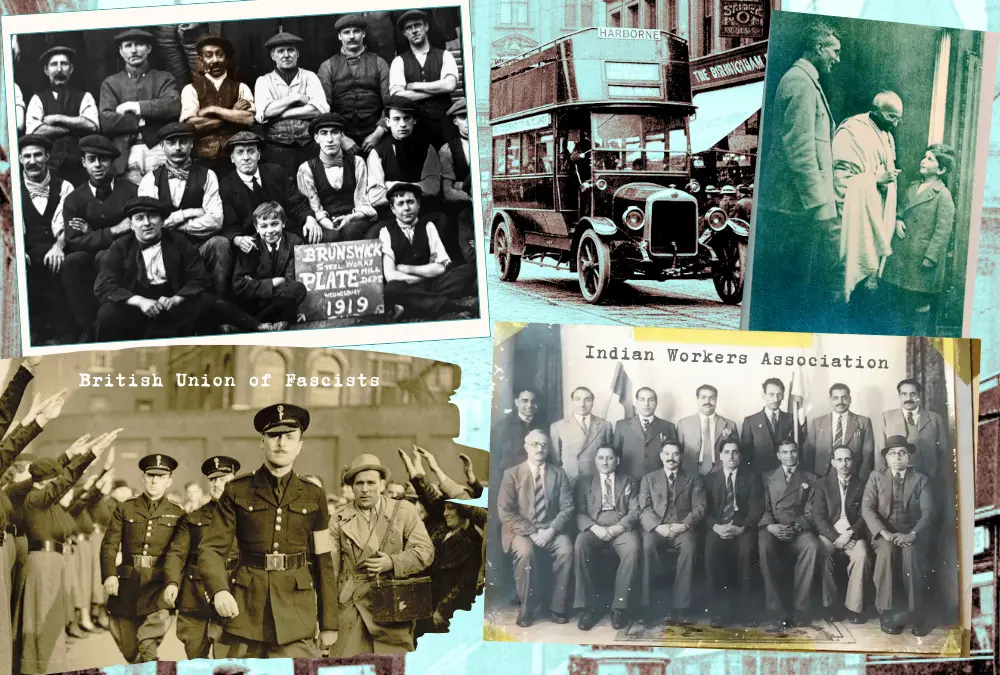
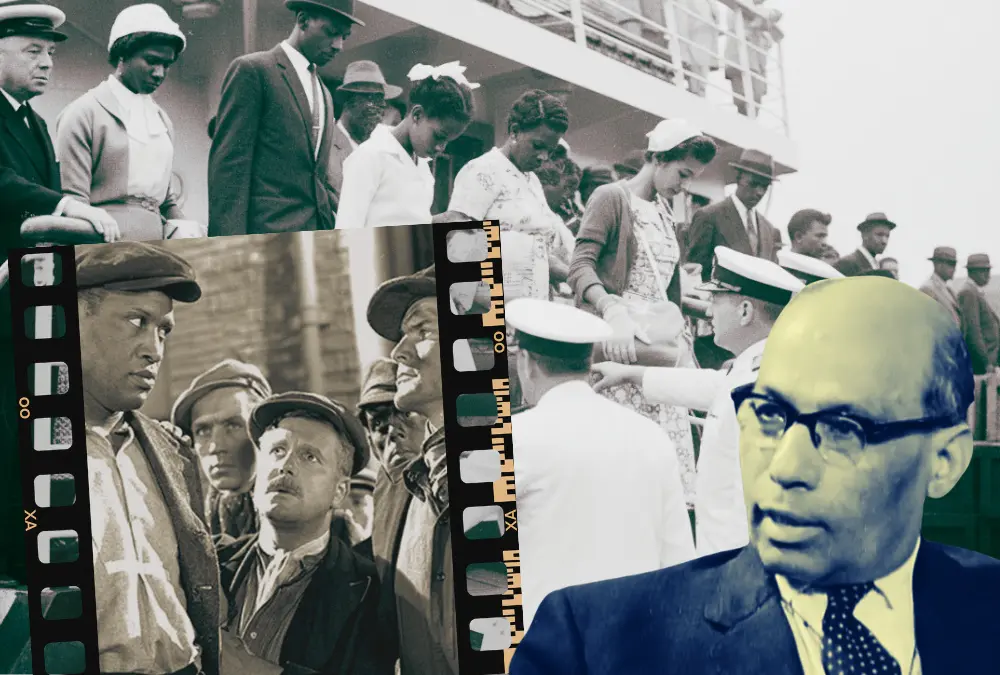
These decades before World War II saw Black, Chinese, and Indian migrants face systemic segregation in Birmingham, spurring early anti-racism efforts against discrimination and fascist figures like Oswald Mosley, with the global significance underscored by Mahatma Gandhi's 1931 visit.

1917 Chinese workers arrive in Birmingham

1920s: Black and Asian workers arrive in Birimgham

1931 Hebrew school opens in Birimgham

1931 : Gandhi visits Birmingham

1932: British Union of Fascists (BUF) Founded

1938: Founding of the Indian Workers Association

1940s

From Indian workers to Caribbean pioneers, wartime Birmingham exposed tensions of identity, race and belonging in modern Britain, highlighting both solidarity and hostility towards its migrant communities.

1940: League of Coloured Peoples operates in Birmingham

1940: 'The Proud Valley' screens in Birmingham – Paul Robeson and the Power of Black Solidarity

1945: Court Dismisses Colour Bar at Kent Street Public Baths

1945-46: Dr Dhani Prem – Birmingham’s First Asian Councillor and Advocate for Mental Health

1942-1946: Police Surveillance of Indian Workers in Birmingham

1948: Arrival of the Empire Windrush – A Symbolic Beginning

1948: The Cosmopolitan Club – A Safe Space for Interracial Couples in Birmingham

1948: Race Riot in Birmingham – “Get Them Out”

1949: Race Riot at Causeway Green Hostel, Oldbury

1949: Amy Ashwood Garvey Settles in Handsworth

1950s

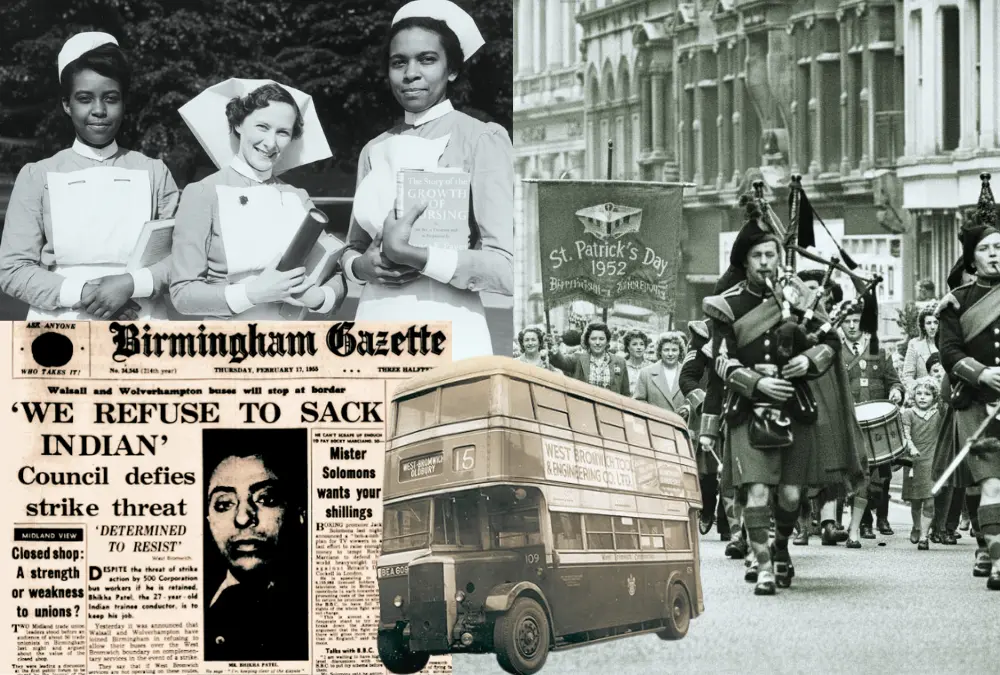
Birmingham in the 1950s underwent a significant social transformation, characterised by the emergence of new migrant communities from the Commonwealth who, while facing prejudice, actively built their own institutions and laid the groundwork for future civil rights struggles.

1950: Birmingham Establishes Its First Committee on Immigrant Issues

1951: Caribbean Nurses Recruited to Birmingham Hospitals

1952: Britain’s First St Patrick’s Parade

1953: Henry Gunter Leads Housing Protest in Birmingham

1955: Bus Strike in West Bromwich over Employment of Indian Conductor

1956: Pakistan Welfare Association Established in Birmingham

1959: Challenging the Birmingham Immigration Control Association

1960s

In the 1960s, Birmingham became a key battleground for racial equality, as a BBC documentary exposed the pervasive "colour bar" and the community's powerful backlash against Enoch Powell's "Rivers of Blood" speech solidified the city's anti-racist movement.

1960: BBC Airs 'The Colony. A Groundbreaking Film on Racism in Birmingham

1961: The Co-ordinating Committee Against Racial Discrimination (CCARD) Established

1962: Smethwick Council Introduces Discriminatory Housing Rules

1964: Anti-Racist Responses to Griffiths’ Smethwick Victory

1964: The Afro-Caribbean Self Help Organisation (ACSHO) Established

1964: Claudia Jones and Asian–Caribbean Solidarity in Smethwick

1965: BBC Films Malcolm X’s Visit to Smethwick

1965: Parents Protest Over Segregation in Birmingham Schools

1967: Tarsem Singh Sandhu Leads the Turban Rights Campaign

1968: “Rivers of Blood,” Resistance in Birmingham, and the Birth of the Black People’s Alliance

1968: Birmingham Commemorates Patrice Lumumba

1970s

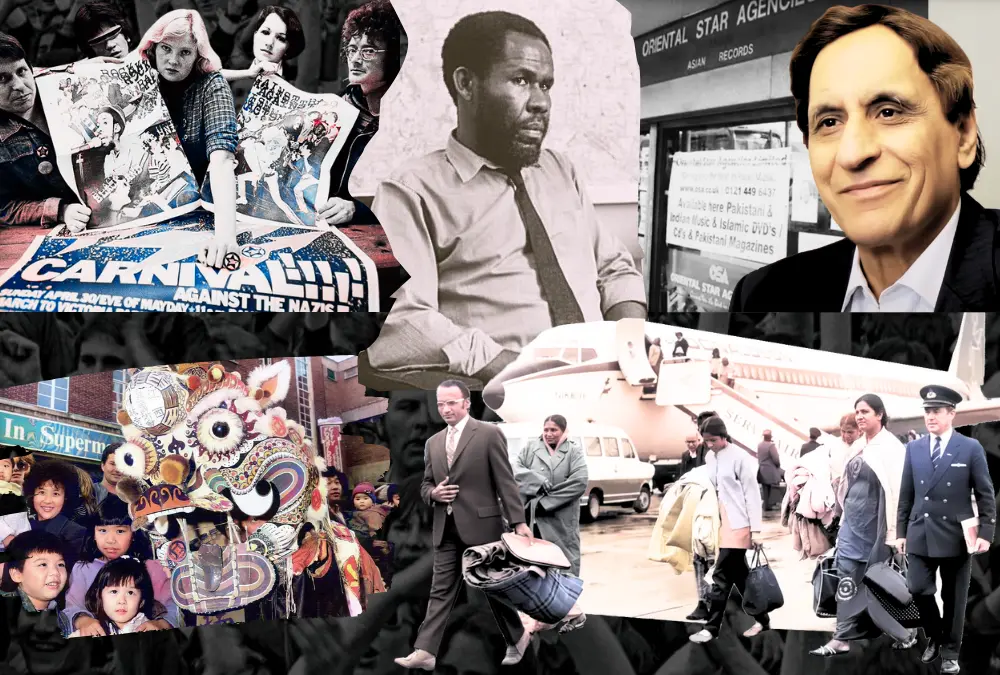
From equality for black nurses, OSA establishing as the first British South Asian record label, and Steel Pulse's anti-facist tour, the 1970s became a powerhouse of grassroots anti-racist resistance and cultural transformation in Birmingham.

1970: Mohammed Ayub establishes Oriental Star Agencies

1970: Black Nurses Strike for Equality

1970: Race in the Inner City by Gus John

1970s: Supplementary Schools Challenge Racism in Birmingham’s Education System

1971: National Conference on the Rights of Black People in Britain

1972: Ugandan Asians Arrive in Birmingham

1972: The Battle of Saltley Gate

1974: The Birmingham Six and the Beginnings of a Long Campaign for Justice

1974: Founding of All Faiths for One Race (AFFOR), Handsworth

1977: African Liberation Day in Handsworth Park

1977: Formation of the Chinese Community Centre

1978 Steel Pulse release Handsworth Revolution

1979: Rock Against Racism/Anti-Nazi League Tour Visits Birmingham

1979: Bert Carless Elected as Birmingham’s First Black Councillor

1980s

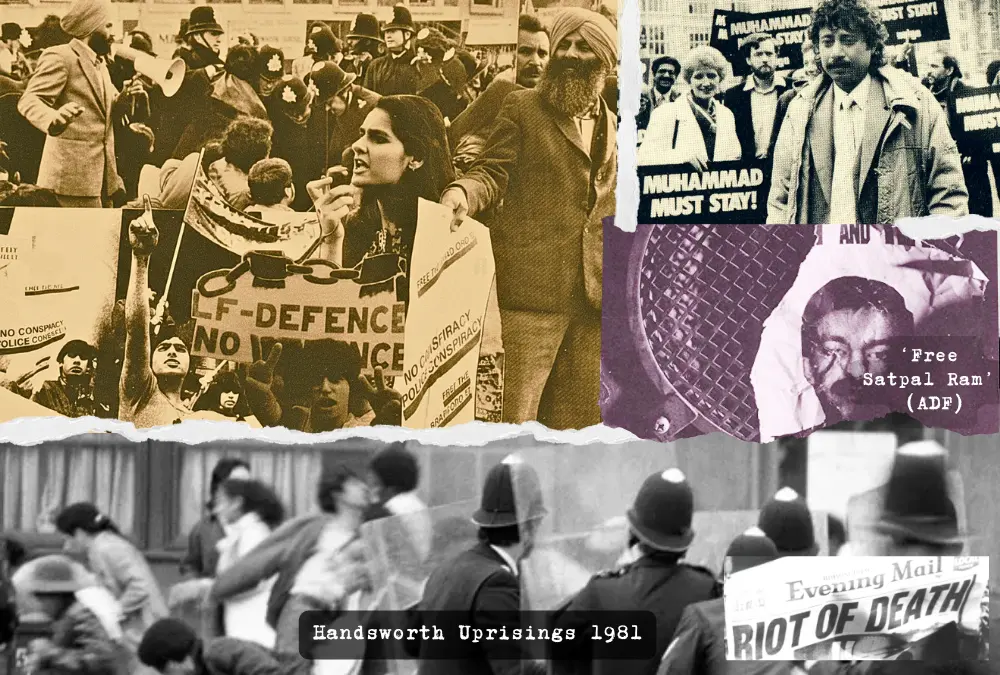
Fueled by the Handsworth Uprisings and militant youth groups like the Birmingham Black Sisters, the 1980s solidified Birmingham's anti-racist resistance and achieved global cultural milestones with Steel Pulse and the BLK Art Group.

1980: The Anwar Ditta Campaign launched

1980: Education for Our Multicultural Society

1981–82: Birmingham Asian Youth Movement and Birmingham Black Sisters Established

1981: Handsworth Uprisings

1982: National BLK Art Convention Held in Wolverhampton

1982: The Empire Strikes Back: Race and Racism in 70s Britain Published

1983: Muhammad Idrish Defence Campaign Launched

1984: Kewal Brothers Strike, Birmingham

1984: Handsworth Carnival Launched in Handsworth Park

1986: Handsworth Songs by the Black Audio Film Collective

1986: Free Satpal Ram Campaign Launched

1986: A Different Reality Report Published

1987: Steel Pulse Wins Grammy for Best Reggae Album

1989: Birmingham Racial Attacks Monitoring Unit (BRAMU) Established

1990s

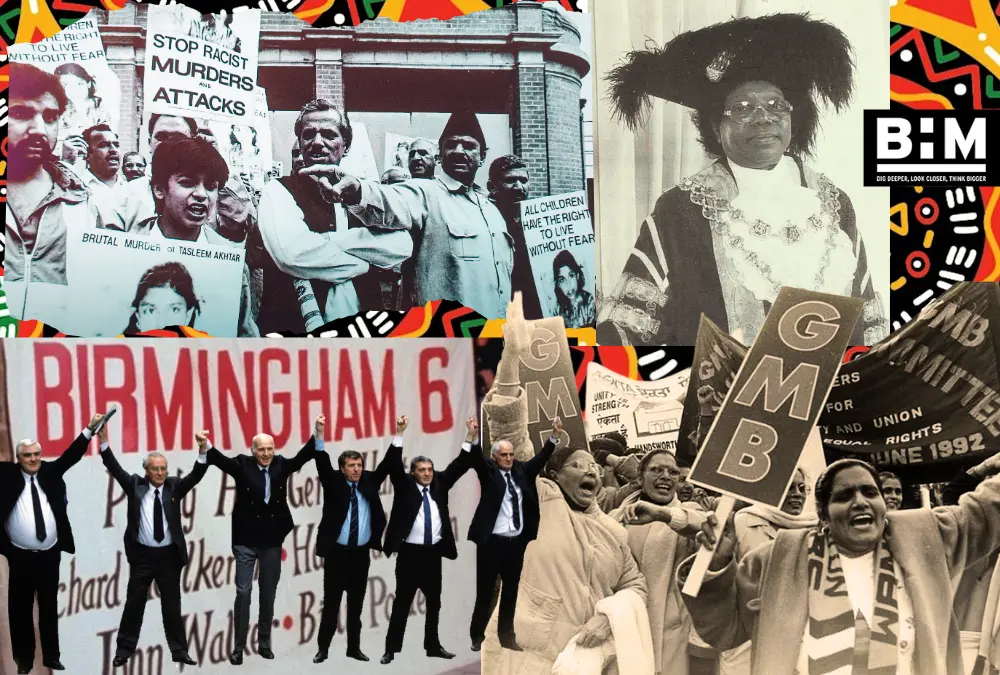
Driven by the Birmingham Six release, the 1990s achieved lasting civic accountability through the ADAE Campaign and the UFFC, which sought justice following losses like Tasleem Akhtar; while simultaneously celebrating super-diversity and achieving the historic election of Sybil Spence.

1989–1990: Murder of Tasleem Akhtar and Community Campaign for Justice

1990: Eid Mela Established as Major Cultural Event

1991: Racism in Our Cities by Vanley Burke Exhibited

1991: Release of the Birmingham Six

1992: First Vaisakhi Festival Held in Handsworth Park

1992: Land of Money and Birmingham’s First Black History Month

1992: Birmingham’s First Black History Month Pilot

1993: Racist Attack on Clive Forbes

1993: Burnsall Workers Strike

1995: Birmingham Launches All Different All Equal Campaign

1997: Sybil Spence Becomes Birmingham’s First Black Lord Mayor

1997: United Families and Friends Campaign (UFFC) Established

2000s

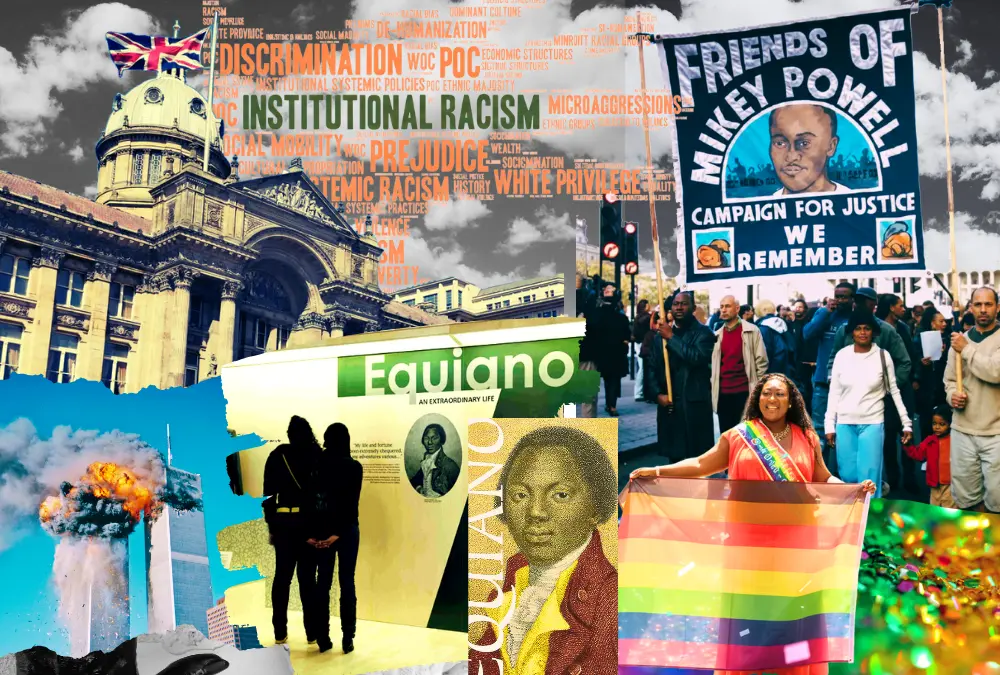
The 2000s in Birmingham saw institutional denial of racism and post-9/11 Islamophobia ignite a wave of grassroots and intersectional resistance, notably the Mikey Powell Campaign and Lady Phyll founding UK Black Pride.

2001: Birmingham City Council Considers Challenges to Institutional Racism

2001: 9/11 Impacts Birmingham

2003: African Caribbean and Asian Education Action Plans

2003: Friends of Mikey Powell Campaign Launched

2005: Birmingham-born Phyllis Opoku-Gyimah Founds UK Black Pride

2006: Olaudah Equiano Exhibition at Birmingham Museums and Art Gallery

2010s

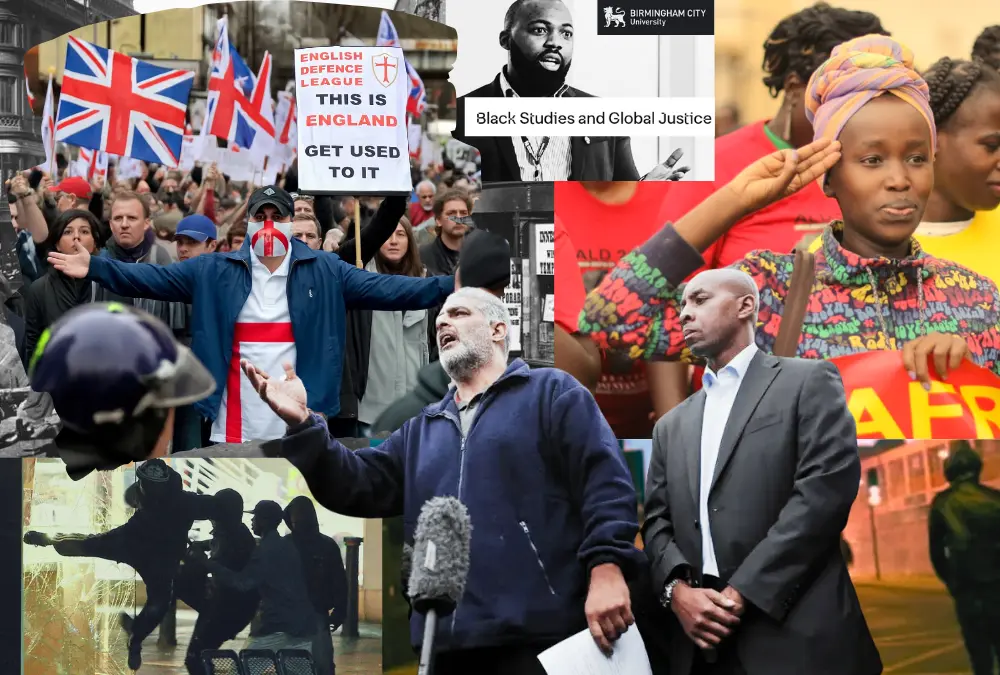
Facing far-right violence and institutional moral panic, the 2010s in Birmingham fueled a powerful movement for decolonisation and intellectual resistance, culminating in Europe's first Black Studies degree and landmark cultural reckoning.

2010: English Defence League Hold Far-Right Marches Across the Midlands

2011: Handsworth and Birmingham Riots

2013: Terrorist Murder of Mohammed Saleem and Far-Right Violence in Birmingham

2013: Trojan Horse Affair

2015: 40th Anniversary of African Liberation Day

2018: The Past Is Now Exhibition Launched

2017: Europe’s First Black Studies Degree Launched

2019: Literature Must Fall Campaign Launched

2010 Post–War on Terror Migration and the Centre for Superdiversity

2020s

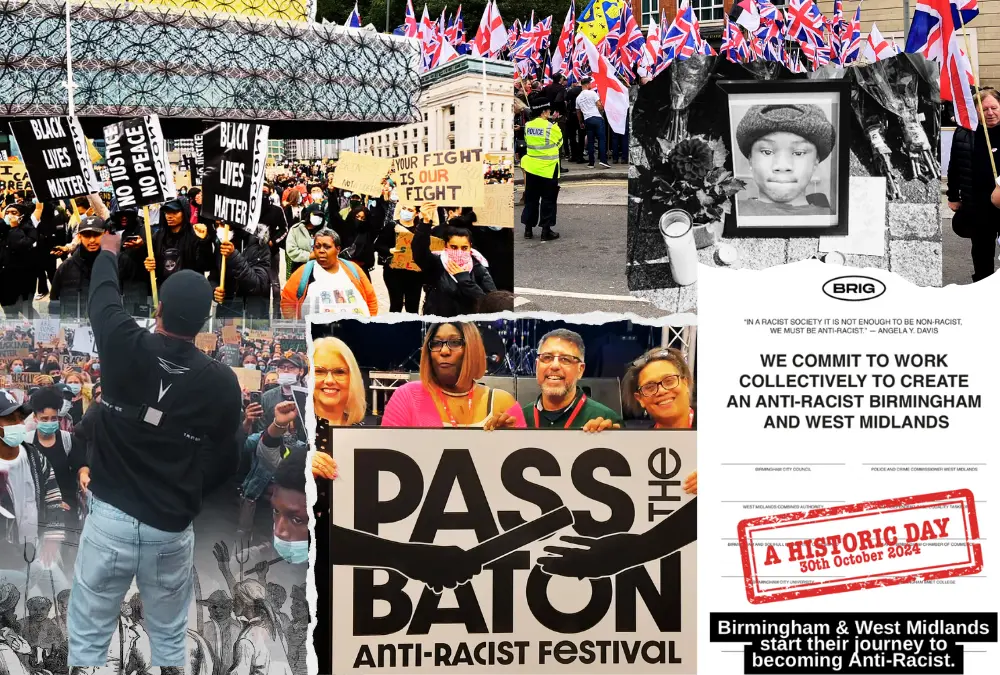
The 2020s saw the energy of the Black Lives Matter movement translate into a fight for institutional accountability, marked by landmark convictions, the signing of the BRIG Anti-Racist Pledge for Birmingham and the West Midlands, and persistent resistance to racist violence and imperial legacies.

2020: Black Lives Matter Protest Against Birmingham’s Imperial Past

2021: Racist Murder of Dea-John Reid

2021: Landmark Case Sees Police Officer Jailed for Death of Dalian Atkinson

2022: Open Letter to Commonwealth Games Board over Lack of Diversity

2022: Christopher Samuel Exhibition Launched

2023: Kings Heath United Against Racism Launched After Islamophobic Attack

2023: The Tiny Spark – Film by Pogus Caesar, Commissioned by Birmingham Museums Trust

2023: Pass the Baton Anti-Racist Festival

2024: University of Birmingham Palestine Solidarity Encampment

2023: Benjamin Zephaniah Mural, Exhibition, and Legacy

2024: Birmingham Race Impact Group Launch Landmark Anti-Racist Pledge

2025: Britain First Allowed to Use Victoria Square – A Costly Mistake

Downloads

Literature Reviews

The Literature Reviews are a vital cornerstone of the Pioneers Heritage Lottery Funded project, meticulously documenting a century of anti-racist struggle in Birmingham. By preserving the “living memory” of local activism, these reviews shift the focus from cold statistics to the lived experiences of those who fought for justice. They provide a essential repository of historical lessons and best practices, aiming to “pass on the baton” to new generations and equip them for the ongoing journey toward an anti-racist city.

Introduction

Here is the full introduction to the literature reviews.

Timeline

This is the complete timeline of anti-racism between 1900s-2020s.

01

Criminal Justice

Examining Birmingham’s criminal justice history, this review uncovers how systemic biases and colonial legacies have shaped the policing of racialised communities. It highlights the persistent grassroots struggles for accountability, legal fairness, and structural reform.

Powered By EmbedPress

02

Employment

Tracing Birmingham’s employment landscape from the early 20th century, this review details the systemic inequalities and wage disparities faced by Global Majority workers. It celebrates the resilient community-led strikes and campaigns that fought for workplace justice.

Powered By EmbedPress

03

Health & Housing

Uncovering a century of systemic housing and health discrimination in Birmingham, this review documents the persistent marginalisation of Global Majority communities. It highlights the vital grassroots activism from the 1930s to today that continues to challenge these deep-seated inequalities.

04

Education

This review examines Birmingham’s anti-racist education history, shifting focus from mere data to the lived experiences of “dignity” and “potential.” It celebrates the community-led activism and supplementary schools that have humanised learning despite systemic challenges.

Powered By EmbedPress

Complete Literature Reviews

Here is the full document containing all the literature reviews..