
Driven by the Birmingham Six release, the 1990s achieved lasting civic accountability through the ADAE Campaign and the UFFC, which sought justice following losses like Tasleem Akhtar; while simultaneously celebrating super-diversity and achieving the historic election of Sybil Spence.
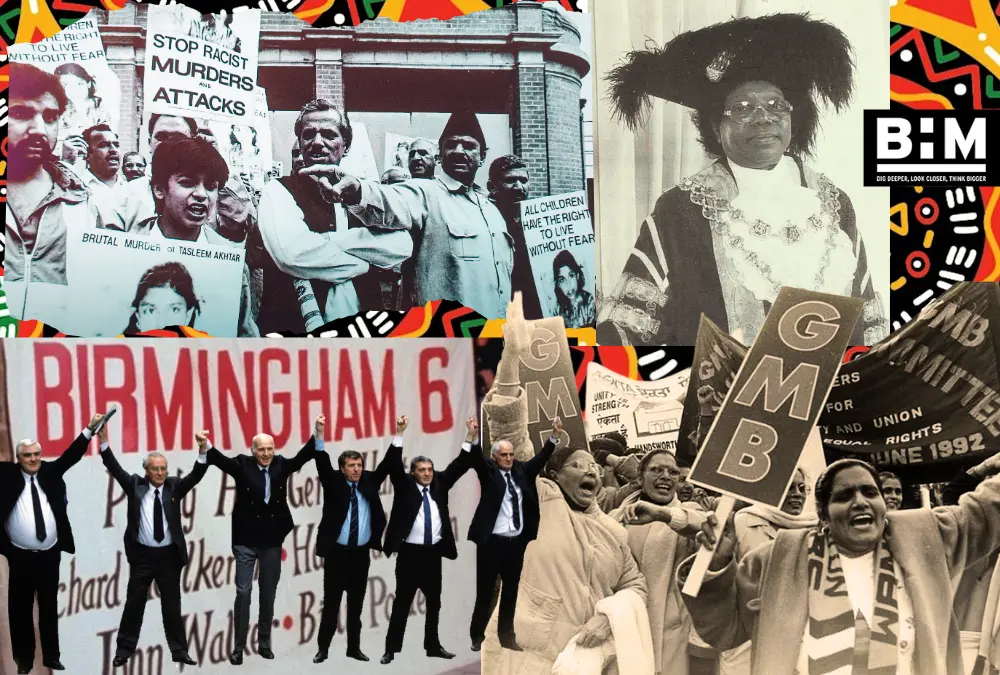
The 1990s in Birmingham marked a crucial pivot toward institutionalising anti-racist structures while maintaining a fierce commitment to grassroots justice.
The decade was galvanised by the triumphant release of the Birmingham Six (1991), a monumental victory that fueled national demands for legal accountability.
However, the urgent need for action persisted, as shown by the brutal racist attack on Clive Forbes and the militant Burnsall Workers Strike (1993), where South Asian migrant women fought exploitative labour conditions. This period spurred the creation of critical protection groups, including the United Families and Friends Campaign (UFFC) (1997) against state violence and the city-wide All Different All Equal (ADAE) Campaign (1995), which later evolved into the influential organisation brap.
The ten years simultaneously championed super-diversity by bringing marginalised histories and cultures into the civic mainstream.
Birmingham cemented its inclusive identity by establishing major public festivals like the Eid Mela and the Vaisakhi Festival (1992), alongside the official launch of Black History Month, which amplified long-marginalised Black and Asian histories. This push for cultural visibility culminated in a major political breakthrough with the historic election of Sybil Spence (1997), the city’s first Black Lord Mayor.
By bridging cultural affirmation with concrete policy and political power, the 1990s established lasting precedents for accountability, representation, and equality.

1989–1990: Murder of Tasleem Akhtar and Community Campaign for Justice
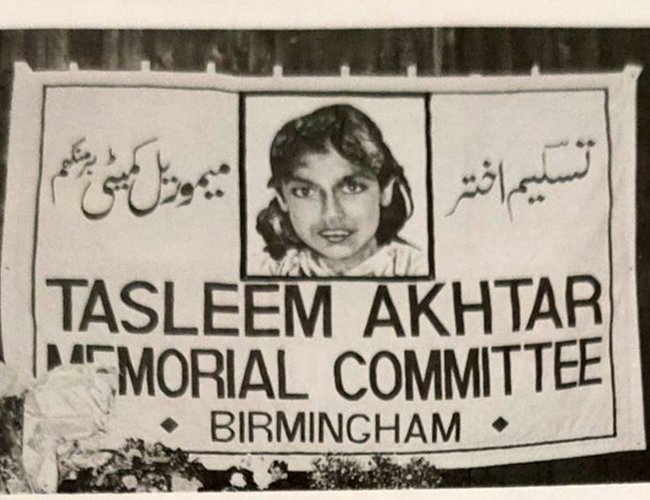
On 6 December 1989, 11-year-old Tasleem Akhtar was murdered on Esme Road, Sparkhill—a tragedy that shook Birmingham’s migrant and working-class communities. Her death became a painful symbol of the fear and neglect experienced by many Black and Asian families facing racism, violence, and systemic failure. In response, the Pakistani Workers’ Association (PWA), alongside Tasleem’s family, launched a campaign demanding justice and greater protection for vulnerable residents.
Through rallies, petitions, and public meetings, campaigners confronted local authorities and called for action on policing, housing, and racial inequality. A major demonstration outside Birmingham Central Library drew significant attention, ensuring Tasleem’s story was neither ignored nor depoliticised.
In 1994, the Tasleem Akhtar Memorial Committee petitioned to rename Esme Road in her honour—a lasting symbol of remembrance. Archival traces survive in the PWA collection and Birmingham Library’s Trade Union Resource Centre, including photographs by David Butt. The campaign remains a powerful example of grassroots resilience and the fight for justice in 1990s Britain.
Watch here
1990: Eid Mela Established as Major Cultural Event
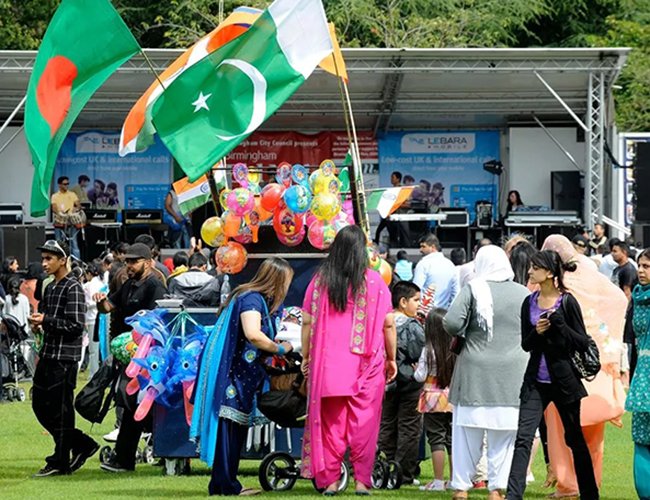
In the early 1990s, Birmingham City Council launched the Eid Mela as a public celebration of Eid, reflecting both the city’s growing Muslim population and its commitment to multiculturalism. Initiated by the Council’s Members Panel on Race Equality, the Mela aimed to honour the cultural and religious life of Birmingham’s diverse communities.
Held in Cannon Hill Park, the festival began modestly but quickly grew into one of the city’s major annual events. Blending the religious spirit of Eid with music, food, stalls, and family activities, it created a space where Muslim traditions could be celebrated openly while welcoming wider community participation.
At a time when Muslims were often marginalised in media and politics, the Eid Mela offered visibility, joy, and inclusion. It became a powerful symbol of representation, community pride, and cultural exchange. Now attracting tens of thousands each year, the Mela stands as one of Europe’s largest events of its kind—a lasting expression of Birmingham’s inclusive civic identity.
1991: Racism in Our Cities by Vanley Burke Exhibited
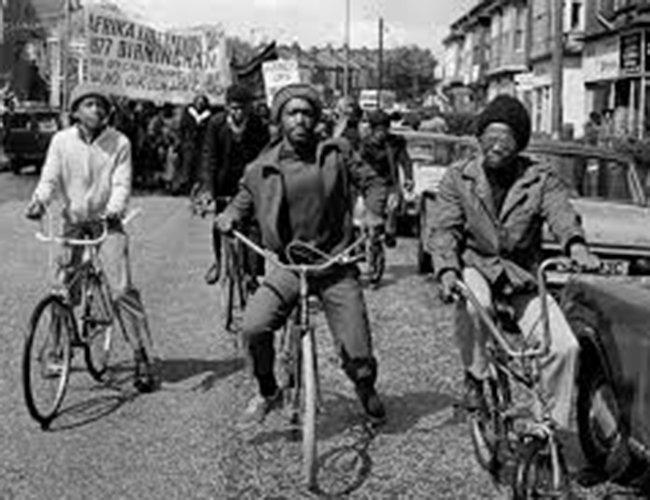
in 1991, acclaimed photographer Vanley Burke, widely known as the “Godfather of Black British photography”, unveiled Racism in Our Cities. The exhibition offered a powerful visual critique of structural racism in urban Britain, drawing from Burke’s decades-long commitment to documenting Black life, struggle, and resilience, particularly in Birmingham’s Handsworth.
Since the 1960s, Burke had captured both political activism and everyday moments—protests, uprisings, domestic life, faith, and celebration—foregrounding the lived realities of inequality in housing, policing, and employment. Racism in Our Cities brought these themes together, offering a counter-narrative to mainstream media portrayals of Black communities as sites of crime or decline.
The exhibition stood at the forefront of a broader 1990s movement where Black artists used visual culture to confront institutional racism. Alongside the BLK Art Group, Burke’s work helped forge a cultural politics where art and activism were inseparable. His exhibition remains a landmark in British visual culture and a testament to community strength and resistance.
Watch
1991: Release of the Birmingham Six
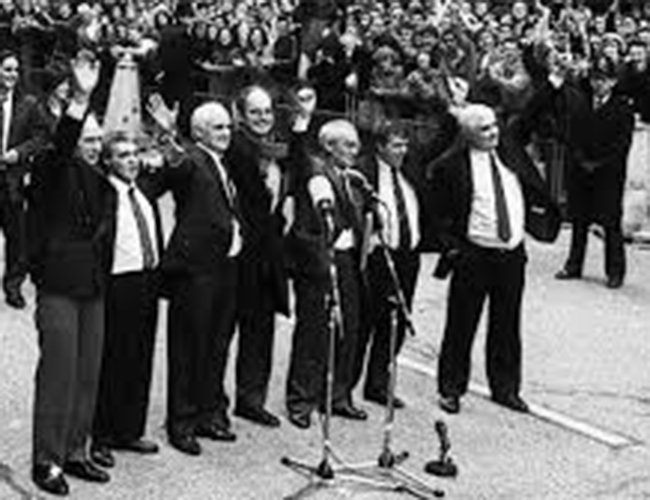
In March 1991, the convictions of the Birmingham Six. Hugh Callaghan, Patrick Hill, Gerard Hunter, Richard McIlkenny, William Power, and John Walker, were quashed after 16 years of wrongful imprisonment for the 1974 Birmingham pub bombings, which killed 21 and injured over 180.
The men had always maintained their innocence, alleging they were beaten into signing false confessions. Their case collapsed when new evidence exposed police misconduct, including fabricated statements uncovered through Electrostatic Document Analysis (ESDA), and discredited forensic tests that had underpinned the prosecution.
Their release marked a watershed moment, exposing deep flaws in Britain’s justice system. Anti-Irish racism, political pressure, and poor forensic standards had converged to secure false convictions. Public outcry led to the Royal Commission on Criminal Justice, charged with reforming investigative and legal safeguards.
The Birmingham Six case remains one of the UK’s most infamous miscarriages of justice—a stark warning of how systemic bias and unchecked state power can destroy lives, and a testament to the power of relentless campaigning.
Watch more
1992: First Vaisakhi Festival Held in Handsworth Park
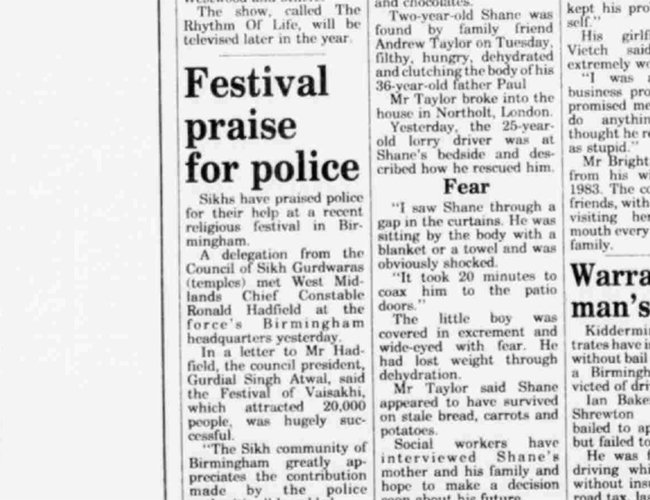
In April 1992, Birmingham hosted its first major Vaisakhi Festival in Handsworth Park, organised by the Birmingham Sikh Council of Gurdwaras with support from the City Council. This landmark event brought one of Sikhism’s most important celebrations into the heart of public life, marking a milestone in the city’s recognition of Sikh heritage.
Vaisakhi commemorates the 1699 founding of the Khalsa by Guru Gobind Singh—a moment symbolising equality, faith, and collective identity. For Birmingham’s Sikh community the festival was both a religious observance and a proud expression of cultural belonging.
Thousands gathered for a day of devotion, music, food, and celebration, with families, faith leaders, and residents of all backgrounds coming together.
The success of the 1992 event laid the foundation for one of Europe’s largest Vaisakhi celebrations, expanding to include city-wide processions. More than a celebration, it affirmed Sikh identity in public life and helped embed Vaisakhi in Birmingham’s cultural calendar.
1992: Land of Money and Birmingham’s First Black History Month
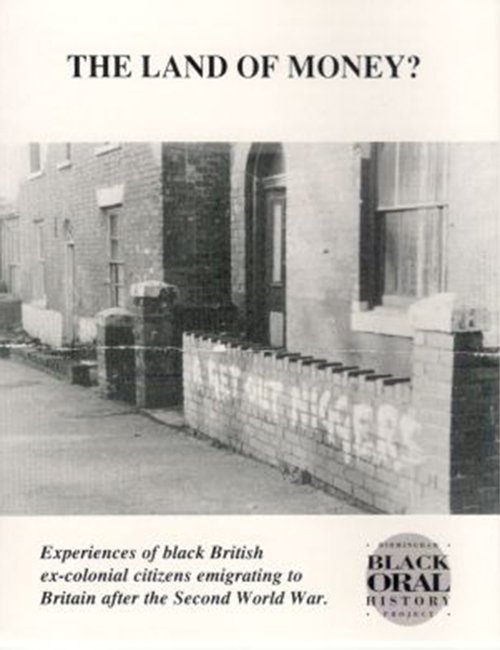
In October 1992, Birmingham launched its first official Black History Month, spearheaded by the City Council’s Race Relations Unit. The initiative marked a pivotal moment in the city’s cultural and educational life, creating space for telling Black and Asian histories long ignored in mainstream narratives.
Central to this debut was Land of Money, an exhibition produced by the Birmingham Black Oral History Project. Using oral testimonies, photography, and archival sources, it recalled the lives, labour, and cultural contributions of Birmingham’s African‑Caribbean and South Asian communities. By foregrounding working-class and migrant experience, Land of Money challenged prevailing accounts of the city’s past, showing how communities of colour helped shape its industries, neighbourhoods, and culture.
The project was driven by activists like Doreen Price, Ranjit Sondhi, Siobhan Harper‑Nunes, and Jeff Wilkins, whose rooted commitment ensured that both the exhibition and Black History Month were grounded in community knowledge and lived experience. Their work laid the foundation for an annual programme of talks, exhibitions, workshops, and cultural events that continues today.
More than celebration, Birmingham’s 1992 Black History Month was a political intervention—demanding recognition, equity, and institutional change. Thirty years on, it remains a fixture in the city’s civic life, a testament to activism, memory, and enduring commitment to visibility and justice.
1992: Birmingham’s First Black History Month Pilot
In October 1992, Birmingham hosted its first official Black History Month, piloted by the City Council’s Race Relations Unit. It marked a cultural turning point, creating space to celebrate Black and Asian histories long excluded from mainstream narratives.
Central to the launch was Land of Money, an exhibition developed through the Birmingham Black Oral History Project. Using oral testimonies, photography, and archives, it documented the lives, labour, and contributions of African-Caribbean and South Asian communities. foregrounding the working-class and migrant experiences that shaped Birmingham’s industries and neighbourhoods.
Driven by figures like Doreen Price, Ranjit Sondhi, Siobhan Harper-Nunes, and Jeff Wilkins, the programme was rooted in community knowledge and lived experience. Their efforts laid the foundation for a lasting annual series of events—exhibitions, talks, workshops, and celebrations.
The launch of Black History Month was both a celebration and a political act, challenging systemic exclusion in education and heritage. Thirty years on, it remains a vital part of Birmingham’s civic calendar and cultural life.
1993: Racist Attack on Clive Forbes
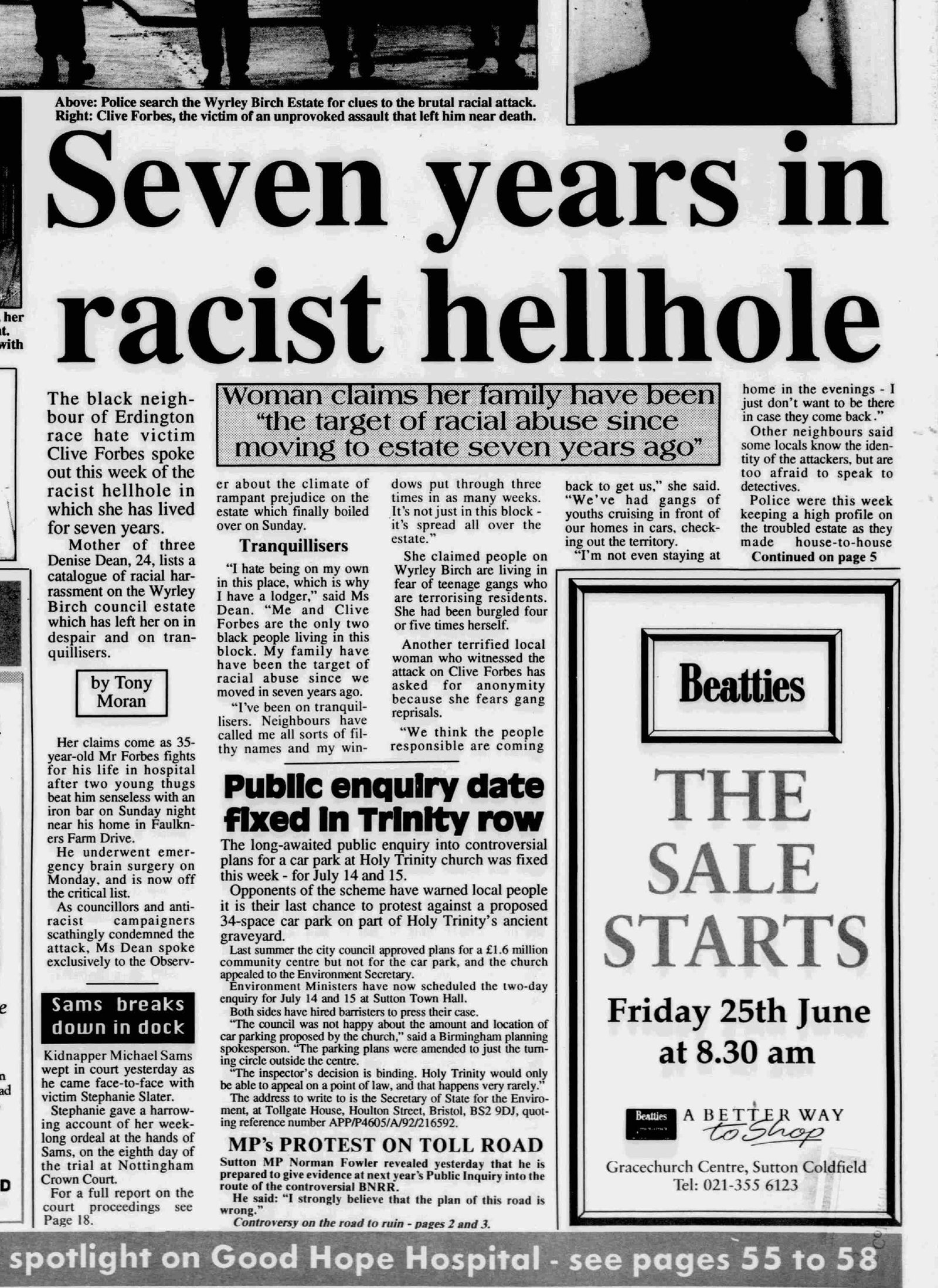
In 1993, Birmingham was shaken by the brutal racist attack on Clive Forbes, a Black machinist newly settled on the Wyrley Birch estate. One night, a gang of white youths chased him to his flat, smashed down his door, and forced him to leap from a 25-foot balcony to escape, surviving with serious injuries.
This was not an isolated incident but part of a wider pattern of racist intimidation on the estate and nearby areas like Kingstanding. Irish Catholic families also faced harassment, and Ku Klux Klan leaflets were distributed outside a local school. Far-right groups such as Combat 18 were active, fostering fear and division.
The attack prompted national outrage and a solidarity march led by anti-racist groups demanding justice and community protection. Activists highlighted not only the threat of the far right but institutional failures to tackle racism.
Forbes’s survival and the mobilisations that followed remain a powerful reminder of both the violence Black communities faced and the strength of grassroots resistance in Birmingham.
1993: Burnsall Workers Strike
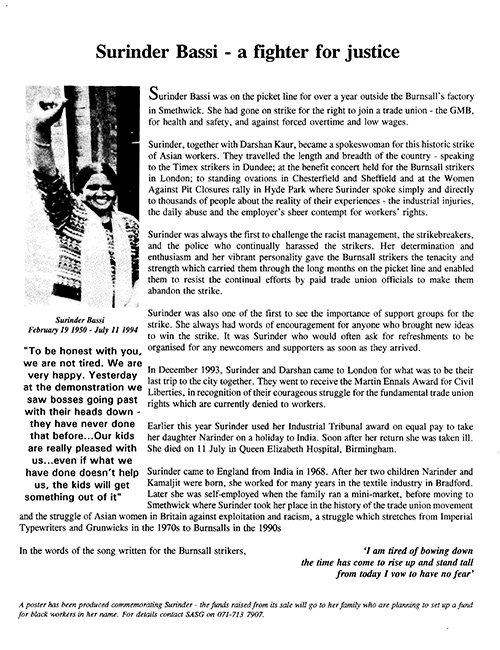
In February 1993, South Asian workers at the Burnsall metal finishing factory in Smethwick gained national attention for their strike against exploitative and unsafe conditions. The action, led by nineteen, mostly women workers, lasted from June 1992 to June 1993 and demanded union recognition, equal pay, and basic safety protections.
Described by workers as “Victorian,” the factory forced 56-hour weeks, compulsory overtime, and exposure to hazardous chemicals without proper equipment. Led by Surinder Bassi and Darshan Kaur, the strike exposed the broader exploitation of migrant women in low-paid, dangerous jobs.
Despite public support, all 19 workers were dismissed, and the GMB union later withdrew its backing. Undeterred, the women took their campaign to parliament, the media, and the streets, framing their struggle through race, gender, and class.
In 1993, they received the Martin Ennals Civil Liberties Award, and their story was captured in The Women of 10 Downing Street. The Burnsall strike remains a landmark in anti-racist, feminist labour activism in Britain.
watch
1995: Birmingham Launches All Different All Equal Campaign
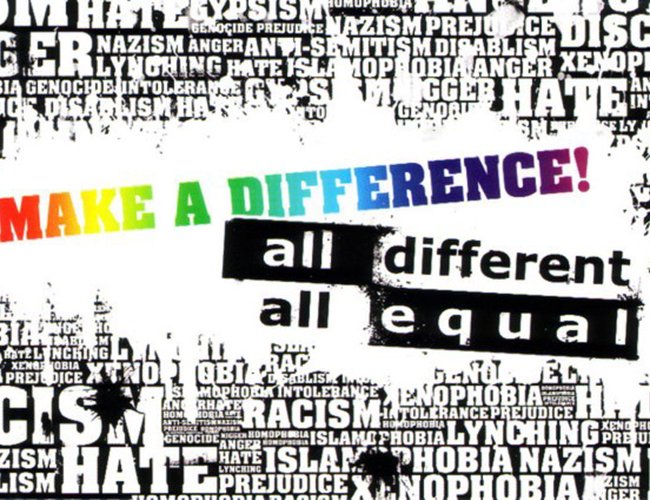
In 1995, Birmingham led the UK’s rollout of All Different All Equal (ADAE), a Council of Europe campaign against racism, antisemitism, and far-right extremism. Launched in Victoria Square with a public declaration by the Lord Mayor and visiting European youth delegates, the event affirmed Birmingham’s commitment to equality and international solidarity. Backed by the Commission for Racial Equality, it gained national prominence.
A cross-sector ADAE Partnership—uniting Birmingham City Council, the NHS, West Midlands Police, the Probation Service, and voluntary groups—delivered the programme through educational and structural initiatives. Highlights included the “Make the Difference” poster, sent to every city school, and a State of Race report on local inequalities.
Though the campaign formally ended, its legacy endured. The ADAE Partnership evolved into the Birmingham Race Action Partnership (BRAP), later becoming brap, an independent organisation advancing racial justice and equality.
ADAE’s launch marked Birmingham as a pioneer in anti-racist action, showing how civic collaboration can embed equality into public life.
1997: Sybil Spence Becomes Birmingham’s First Black Lord Mayor
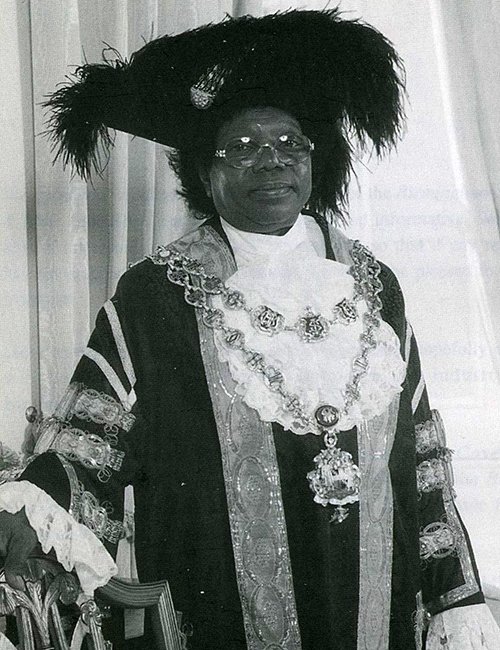
In 1997, Sybil Spence made history as Birmingham’s first Black, and first non-white, Lord Mayor, marking a pivotal moment in the city’s political evolution. Born in Jamaica and part of the Windrush generation, Spence became a long-serving Labour councillor for Soho ward, widely respected for her work on social justice, education, housing, and equality. Her political journey was grounded in community activism, where she championed working-class families and the rights of Birmingham’s diverse Black and Asian communities.
Spence’s election was more than symbolic, it reflected hard-won progress for underrepresented groups in one of Britain’s most multicultural cities. Her year in office was marked by a deep commitment to inclusive representation, ensuring that marginalised voices were heard in civic life.
Her legacy endures as a pioneering figure who paved the way for greater diversity in local government. Spence’s historic appointment remains a landmark in Birmingham’s story, proof that grassroots activism can drive change and shape the future of city leadership.
1997: United Families and Friends Campaign (UFFC) Established
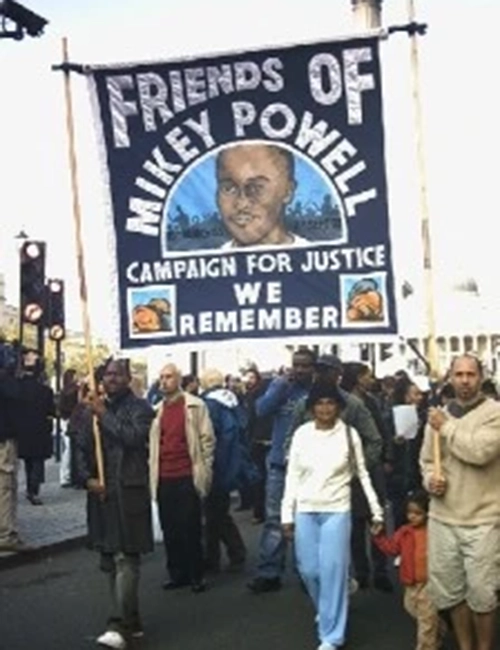
Founded in 1997, the United Families and Friends Campaign (UFFC) is a national coalition of families whose loved ones died in police, prison, or psychiatric custody. Emerging from shared grief and outrage, the campaign united families across the UK, including in Birmingham, revealing a systemic pattern of state violence and institutional neglect.
UFFC provided a vital platform for families to share experiences, demand justice, and hold authorities to account. In Birmingham, the deaths of Mikey Powell (2003) and Kingsley Burrell (2011) became central to its work, exposing ongoing crises in policing, mental health care, and racism.
Their families, like many others, joined UFFC’s annual marches to Downing Street, carrying placards with names and faces of the dead—refusing silence.
UFFC has consistently called for independent investigations, systemic reform, and real accountability. More than a memorial, it is a movement for justice. Its founding marked a turning point, transforming personal loss into national resistance against impunity and affirming families’ right to truth and change.
Watch
We use cookies to improve your experience on our site. By using our site, you consent to cookies.
Manage your cookie preferences below:
Essential cookies enable basic functions and are necessary for the proper function of the website.
These cookies are needed for adding comments on this website.
You can find more information about our Cookie Policy and Privacy Policy.