
Fueled by the Handsworth Uprisings and militant youth groups like the Birmingham Black Sisters, the 1980s solidified Birmingham's anti-racist resistance and achieved global cultural milestones with Steel Pulse and the BLK Art Group.
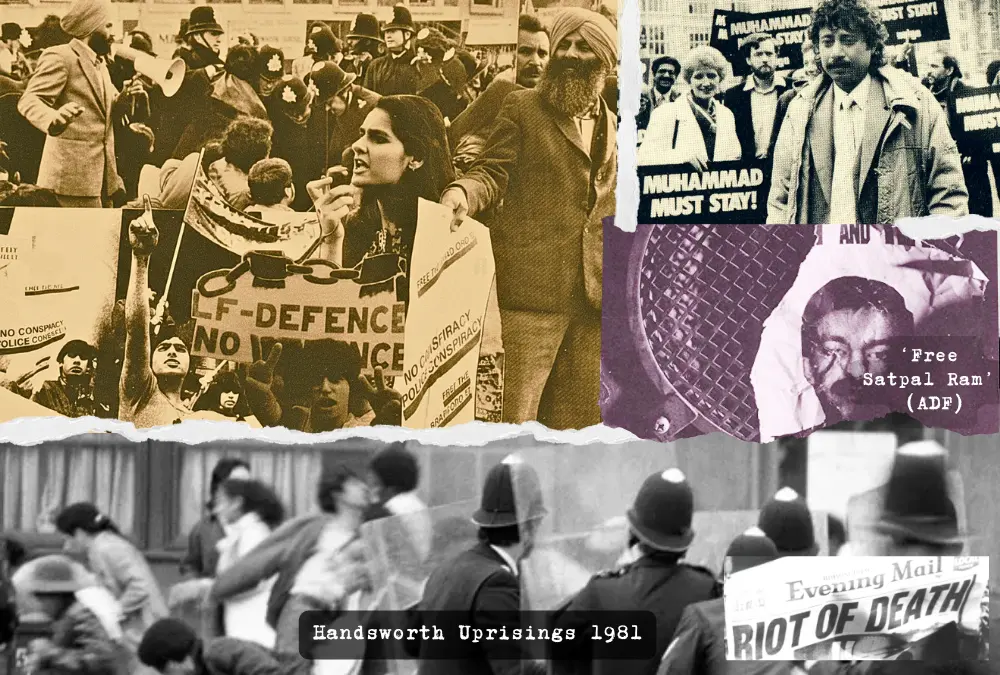
The 1980s were a defining decade in Birmingham’s postwar story. Amid industrial collapse, political unrest, and racial tension, a new generation of British-born youth, children of immigrants—came of age, determined to challenge the injustice and reshape the city in their image.
As Margaret Thatcher’s government pushed through aggressive neoliberal reforms, Birmingham’s manufacturing base, once a symbol of working-class prosperity, largely collapsed. Job losses hit hardest in the inner city, where Black and Asian communities were concentrated. The result was a rapid rise in unemployment, poverty, and disillusionment. The haunting lyrics of The Specials’ 1981 hit “Ghost Town”. This town is coming like a ghost town”, resonated as a grim soundtrack to a city in decline.
Policing worsened tensions. The “sus” laws stop-and-search powers targeting mostly Black youth, turned everyday encounters into flashpoints. In 1981, those tensions erupted. Handsworth, like Brixton and Toxteth, saw days of unrest, as young people took to the streets in what many called a rebellion against police brutality, racial discrimination, and economic abandonment.
But resistance was not only in the streets, it was also in the courts and communities. Two landmark immigration campaigns captured the struggle. The first was led by Anwar Ditta, a British Pakistani mother denied the right to bring her children from Pakistan. Despite overwhelming evidence, the Home Office accused her of fraud. Her case, widely seen as emblematic of a racist immigration system, sparked protests and national outcry. In 1981, she won the right to be reunited with her children, a victory for grassroots organising.
Just two years later, Birmingham activists rallied behind Muhammad Idrish, a trade unionist and anti-racist organiser threatened with deportation. His supporters argued that his case exposed how immigration laws were being weaponised to silence political dissent, especially among Asian and Black organisers. The campaign, backed by youth movements, trade unions, and the Indian Workers’ Association, stopped his removal and spotlighted the political nature of immigration enforcement.
While racism was institutionalised, the response was collective. Black and Asian youth formed organisations like the Birmingham Asian Youth Movement and Birmingham Black Sisters, united in a shared political identity that transcended ethnicity. They built alliances with white working-class youth who also suffered under deindustrialisation and Thatcherite austerity, creating a grassroots, multicultural resistance.
The 1980s in Birmingham were hard, but transformative. From economic wreckage and social unrest came new voices, new solidarities, and a defiant assertion of belonging in the face of exclusion.

1980: The Anwar Ditta Campaign launched
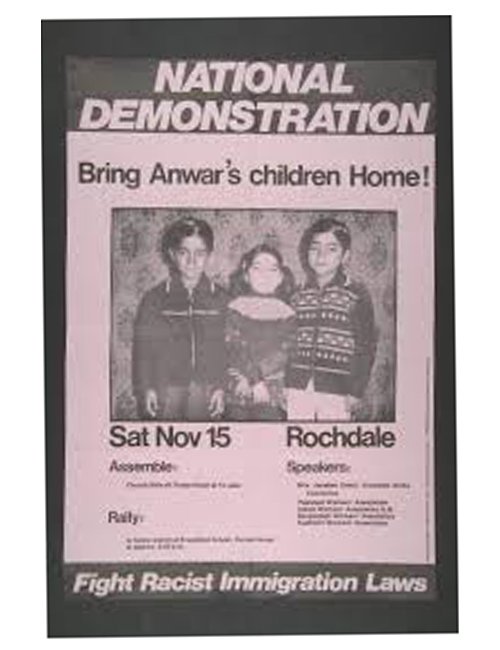
In the late 1970s, Anwar Ditta, a young mother from Rochdale, became the face of a landmark challenge to Britain’s racist immigration system. Although a British citizen, she was denied the right to bring her three children to the UK. The Home Office rejected clear evidence of her maternity, falsely claiming she was trying to “smuggle” unrelated children into the country—a reflection of the discriminatory logic underpinning the 1971 Immigration Act.
Launched in 1979, the Anwar Ditta Campaign quickly gained national momentum. Backed by the Indian Workers’ Association (GB), Asian Youth Movements, trade unions, legal advocates, revolutionary groups, and public figures like Vanessa Redgrave, the campaign used public meetings, protests, and media pressure to expose systemic injustice.
In 1981, after intense public outcry, the Home Office reversed its decision. The campaign became a powerful symbol of resistance to institutional racism in immigration policy and a testament to the impact of grassroots organising grounded in solidarity across race, gender, and class.
Watch here
1980: Education for Our Multicultural Society
In 1980, the City of Birmingham District Council introduced a groundbreaking policy paper, Education for Our Multicultural Society. At a time of mounting racial tensions and persistent inequality in schools, the policy set out a bold vision: that every educational institution and service in Birmingham should establish, uphold, and actively promote racial equality and social justice.
The document acknowledged that the city’s growing Black and Asian communities were being failed by mainstream education, with many pupils facing discrimination, low expectations, and cultural exclusion. It called for curriculum reform to reflect the histories and contributions of diverse communities, alongside teacher training and support to challenge racism in classrooms and playgrounds.
By embedding anti-racism and multiculturalism into official education policy, Birmingham positioned itself at the forefront of progressive approaches to race and schooling. While implementation was uneven and often contested, Education for Our Multicultural Society marked an important step in recognising that equality in education required more than token gestures—it demanded systemic change.
This initiative reflected Birmingham’s status as one of the UK’s most diverse cities and set a precedent for local authorities nationwide, linking education directly to broader struggles for racial justice and inclusion.
1981–82: Birmingham Asian Youth Movement and Birmingham Black Sisters Established
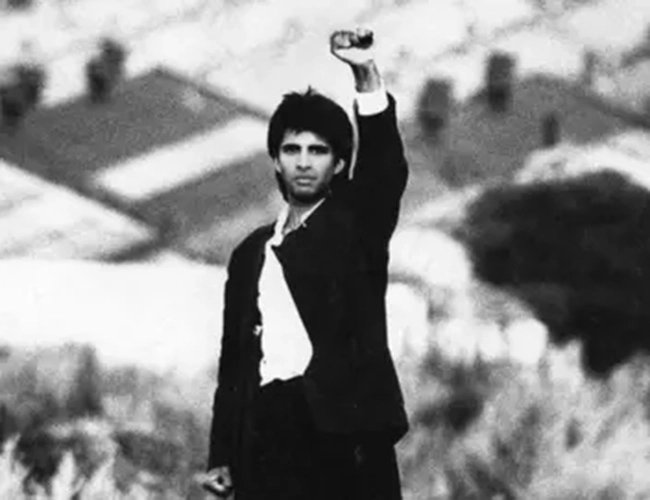
The early 1980s were years of political turbulence in Birmingham, marked by rising unemployment, aggressive policing, and the growing visibility of the far right. In this climate, young people from Black and Asian communities began to organise themselves into militant, independent groups determined to fight back against racism and injustice.
In 1981, the Birmingham Asian Youth Movement (AYM) was formed, part of a national wave of Asian Youth Movements stretching from Bradford to London. Birmingham’s AYM pledged to fight racism in all its forms—whether from the police, employers, or fascist street groups—and linked their activism to wider anti-imperialist struggles. Like their counterparts elsewhere, they adopted “Black” as a political identity, a unifying expression of solidarity that brought together South Asian, African, and Caribbean communities against shared experiences of marginalisation.
The following year, in 1982, the Birmingham Black Sisters (BBS) emerged, representing a new and vital voice in the city’s activism. Rooted in Black Power and anti-imperialist principles, BBS confronted the intersecting oppressions of racism, sexism, and exclusion—not only in wider society but also within both mainstream feminist and male-dominated anti-racist movements. By rejecting external funding, the group maintained its independence and ensured accountability to the women and communities it represented.
Together, the AYM and BBS reflected a new stage in Birmingham’s radical politics—one that was youth-led, grassroots, and unapologetically militant. They broadened the scope of anti-racist struggle, linking the fight against local discrimination to international liberation movements, and insisting that gender equality could not be separated from racial justice.
Their founding marked a turning point in the city’s history: a generation of young Black and Asian activists claiming their right to lead, organise, and define the terms of their struggle.
Read more
1981: Handsworth Uprisings
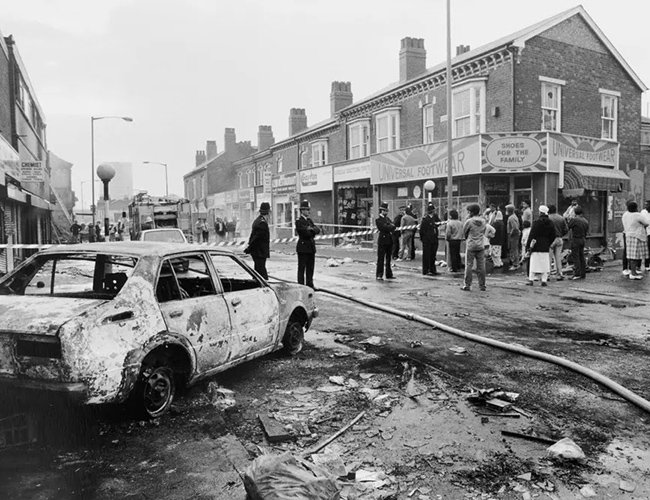
In the summer of 1981, Handsworth, Birmingham, erupted in unrest that echoed uprisings in Brixton, Toxteth, and Moss Side. The immediate trigger was a rumoured National Front march, prompting shopkeepers along Soho Road to board up their businesses. Tensions escalated when a beer glass was thrown at police superintendent David Webb, sparking violent clashes between police and local Black and Asian youth.
The unrest was rooted in years of racial harassment, economic neglect, and mistrust in policing. Handsworth had piloted a “community policing” scheme, but it failed to build trust. Residents, especially young Black men, continued to face the disproportionate use of “sus” laws—stop-and-search powers widely seen as daily harassment.
High unemployment, cuts to housing and social services, and Thatcher-era austerity deepened frustration. In this context, the uprising was a response to systemic injustice.
Superintendent Webb’s resignation marked the collapse of the policing experiment. For many, the 1981 Handsworth Uprising was not disorder but resistance—an urgent demand for justice and dignity.
Watch here
1982: National BLK Art Convention Held in Wolverhampton
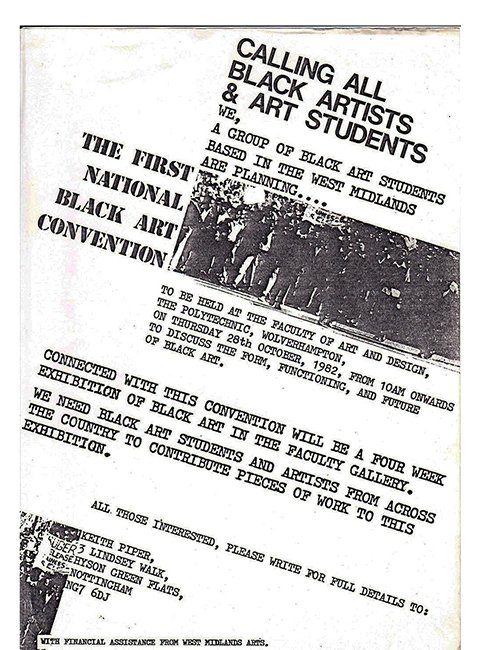
In 1982, Wolverhampton hosted the National BLK Art Convention, a landmark moment in Black British cultural politics. At a time when Black artists were marginalised by galleries, ignored by funding bodies, and stereotyped in the media, the convention provided a vital space for discussion, strategy, and cultural resistance.
Artists, writers, academics, and organisers from across the UK gathered to confront institutional racism in the arts and explore the need for independent Black cultural infrastructures. One key outcome was the formation of the BLK Art Group, whose core members, Keith Piper, Donald Rodney, Marlene Smith (all from Birmingham), and Eddie Chambers (Wolverhampton), redefined British art in the 1980s through bold visual experimentation and radical political critique.
Their work tackled race, colonialism, and representation, challenging both the art world and wider society. The convention also linked art to broader struggles against racism, police violence, and inequality, asserting culture as central to activism.
It marked the rise of a new generation of Black artists who reshaped British art and demanded lasting institutional change.
Watch here
1982: The Empire Strikes Back: Race and Racism in 70s Britain Published
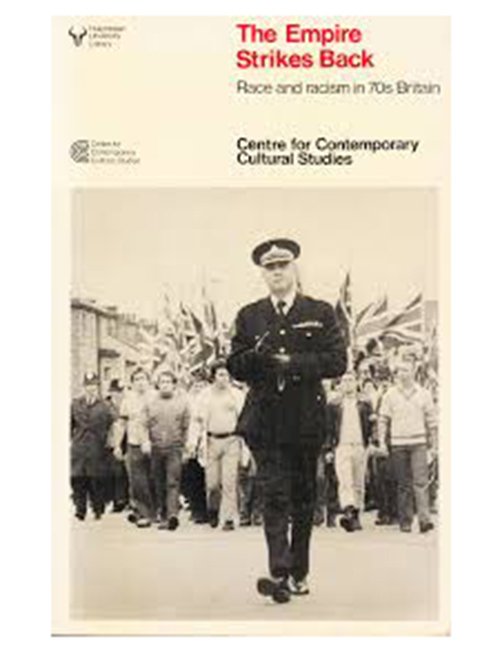
In 1982, the Centre for Contemporary Cultural Studies (CCCS) at the University of Birmingham published The Empire Strikes Back: Race and Racism in 70s Britain, a landmark text in British cultural studies and Black British intellectual thought. Co-authored by Paul Gilroy, Hazel Carby, Errol Lawrence, Stuart Hall, and others, the book challenged dominant narratives about race, firmly rooting contemporary racism in Britain’s colonial past.
Drawing on the Birmingham School’s pioneering research, the book revealed how imperial ideologies continued to shape politics, media, and everyday life. It explored the intersections of race, class, gender, and state power, framing racism as a systemic issue woven into British society.
Deeply grounded in multiracial urban realities, particularly in Birmingham, the book centred the voices of Black and Asian youth facing police harassment, unemployment, and far-right violence. With Stuart Hall’s leadership, it fused theory with activism, rejecting assimilationist approaches and asserting the political agency of marginalised communities.
The book remains a seminal work, linking local resistance to global anti-imperialist struggles.
Watch Stuart Hall here
Read the book
1983: Muhammad Idrish Defence Campaign Launched
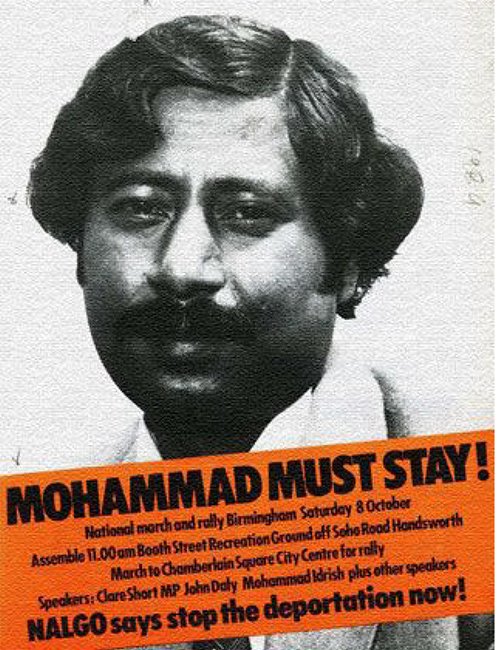
In 1983, the Muhammad Idrish Defence Campaign was launched in Birmingham to resist the attempted deportation of Muhammad Idrish, a respected community activist, trade unionist, and organiser. Known for defending migrant workers’ rights and challenging workplace racism, Idrish had become a prominent anti-racist voice. Supporters argued the Home Office’s deportation efforts were politically motivated, aimed at silencing dissent.
The campaign drew broad support. Anti-racist groups like the Indian Workers’ Association (IWA), Asian Youth Movement (AYM), and Campaign Against Racist Laws joined forces with trade unions including the TGWU, AUEW, and local NUT branches. Together, they organised marches, rallies, petitions, and public meetings, keeping Idrish’s case in the spotlight.
The campaign exposed how immigration laws were weaponised against Black and Asian organisers, while white migrants were rarely targeted. Though the threat of deportation hung over Idrish for years, unified grassroots resistance made quiet removal impossible.
The campaign became a powerful symbol of solidarity, uniting communities, unions, and activists to defend rights and challenge institutional racism.
Watch more
1984: Kewal Brothers Strike, Birmingham
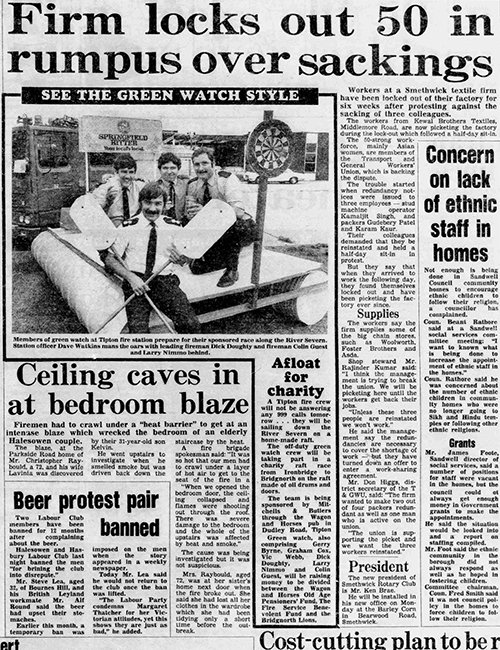
In 1984, workers at Kewal Brothers, a garment factory in Birmingham, launched a landmark strike against exploitative conditions, marking a key moment in anti-racist labour organising in the West Midlands. The predominantly South Asian workforce, many of them migrant women, walked out in protest over low pay, long hours, unsafe conditions, and discriminatory practices that left them doubly marginalised by race and gender.
The strike gained broad support. Local trade unionists stood in solidarity, feminist groups highlighted gendered exploitation, and Birmingham Black Sisters played a vital role in amplifying the voices of women workers and shaping the campaign’s direction. Their involvement linked racism, sexism, and class struggle in a unified fight for justice.
The Institute of Race Relations documented the strike, framing it within broader patterns of racialised labour exploitation. Though hard-fought, the campaign built lasting networks of solidarity.
The Kewal Brothers strike remains a powerful example of how migrant women workers challenged exploitation and redefined workplace organising through collective, intersectional resistance.
1984: Handsworth Carnival Launched in Handsworth Park
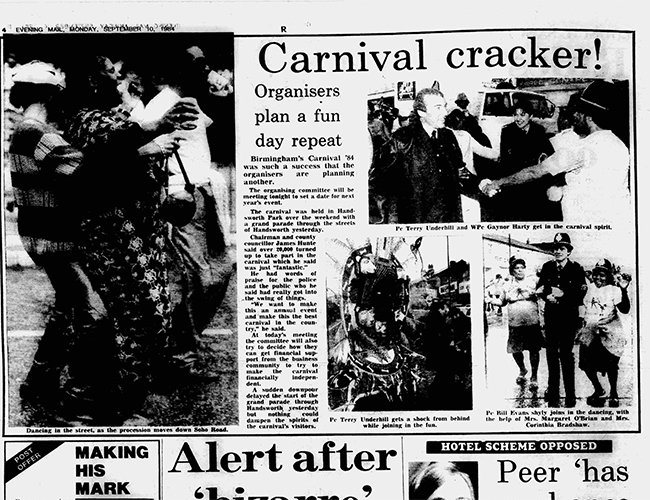
In 1984, the first Handsworth Carnival took place in Handsworth Park, marking a milestone in Birmingham’s cultural and political history. Organised by local community groups and cultural activists, the Carnival was a joyful celebration of African-Caribbean music, identity, and pride, created in defiance of racism, economic hardship, and political marginalisation.
The inaugural event drew large crowds, uniting people through sound systems, steel bands, calypso, reggae, traditional Caribbean food, costumes, and dance. At its core was a powerful message: Birmingham’s African-Caribbean communities were not only present but vital to the city’s cultural life.
As the Carnival grew, it expanded into Birmingham city centre during the late 1980s and 1990s, before relocating to Perry Park, where it became a major biennial event attracting tens of thousands.
More than a festival, the Carnival created a public space for Black cultural expression, challenging marginalisation and countering stereotypes. Today, it remains one of the region’s largest celebrations, a living testament to creativity, resistance, and the legacy of African-Caribbean Birmingham.
Watch
1986: Handsworth Songs by the Black Audio Film Collective
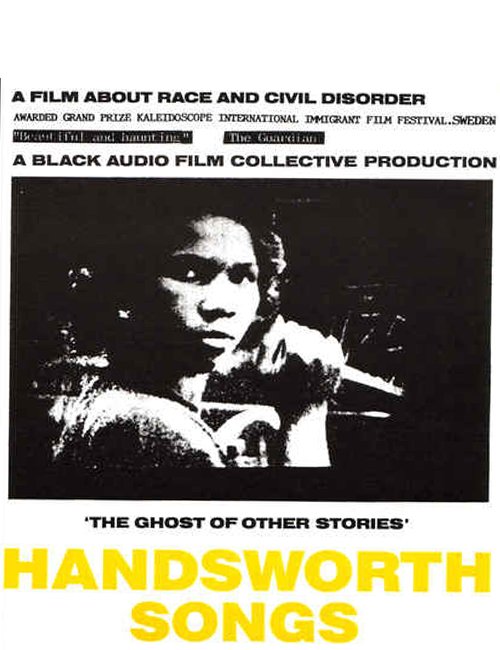
In 1986, the Black Audio Film Collective, led by John Akomfrah, released their groundbreaking debut film Handsworth Songs. Commissioned by Channel 4, it responded to the 1985 Handsworth uprising, when protests against police racism and social inequality escalated into days of unrest.
Rejecting mainstream portrayals of Black youth as a “lawless mob,” Handsworth Songs offered a powerful counter-narrative. Through experimental montage, archival footage, reggae soundscapes, and poetic voiceovers, the film traced the uprising to deeper histories of migration, colonialism, and resistance. It reframed Handsworth not as an isolated riot, but as part of a wider, ongoing struggle for justice.
The film received critical acclaim, winning the BFI’s John Grierson Award for Best Documentary. It placed Black British experience at the heart of cultural discourse at a time when such perspectives were largely excluded from film and television.
Handsworth Songs announced the Black Audio Film Collective as a major force in Black British cultural production, showing how art could challenge dominant narratives and amplify marginalised voices.
Watch here
1986: Free Satpal Ram Campaign Launched
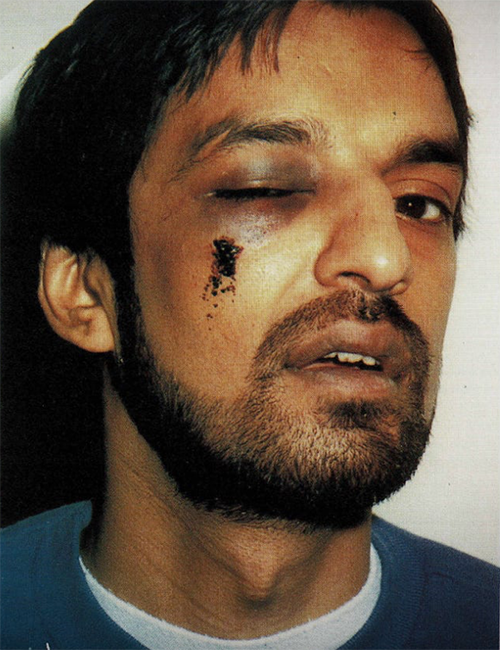
In 1986, the Free Satpal Ram Campaign was launched following the imprisonment of Satpal Ram, a young British Asian man from Birmingham. Ram had been involved in a fatal altercation at a restaurant after being subjected to a racist attack triggered by the playing of Indian music. He claimed self-defence, but the court rejected his plea, sentencing him to life imprisonment.
From the start, activists argued the case revealed deep racial bias within the British justice system. Key witnesses were not heard, and language barriers went unaddressed, undermining Ram’s defence. For many, his conviction symbolised how the system criminalised Black and Asian defendants while downplaying racist violence.
The campaign gained momentum through the support of anti-racist groups, trade unions, students, and community organisations. By the 1990s, it had become a national movement, with protests and media coverage. In 1998, the Asian Dub Foundation’s song “Free Satpal Ram” brought his story to a wider audience.
The campaign exposed systemic injustice, making Birmingham a powerful centre of anti-racist resistance.
Watch ADF
1986: A Different Reality Report Published
In February 1986, the West Midlands County Council’s Race Relations and Equal Opportunities Committee published A Different Reality, an independent report commissioned after the 1985 Handsworth and Lozells uprisings. At a time when media and government portrayed Black communities as “lawless” and “alien,” the report offered a strikingly different perspective.
Instead of blaming the community, A Different Reality rooted the unrest in systemic racism, economic exclusion, and discriminatory policing. It boldly asserted that Black people in Birmingham “are not alien… not a problem,” and demanded “equal treatment, justice and control of their own destiny.”
Challenging the narrow focus of typical official inquiries, the report centred Black voices and reframed the uprisings as resistance to oppression, not mere criminal disorder. It highlighted urgent issues—unemployment, poor housing, educational exclusion, and the abuse of stop-and-search powers—linking them to wider racial injustices.
Though the County Council was later abolished, the report remains a landmark in local race relations, affirming Black communities’ right to justice and self-determination.
1987: Steel Pulse Wins Grammy for Best Reggae Album
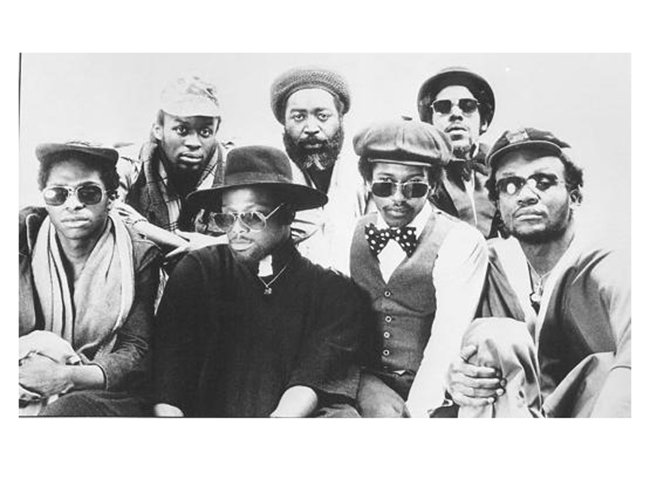
In 1987, Birmingham-based reggae pioneers Steel Pulse made history by becoming the first non-Jamaican act to win the Grammy Award for Best Reggae Album with Babylon the Bandit. The award brought international recognition to a band rooted in Handsworth’s multiracial inner-city community, where music, politics, and resistance were deeply intertwined.
Formed in the mid-1970s by David Hinds, Basil Gabbidon, and Ronald McQueen, Steel Pulse stood out for their fusion of roots reggae with sharp political commentary. Their lyrics tackled the realities of Black British life—police harassment, housing discrimination, and the rise of the National Front, while linking local struggles to global movements against apartheid and colonialism.
By the time of their Grammy win, Steel Pulse were widely known as one of the most politically conscious bands of their era. Their success with Babylon the Bandit demonstrated the global reach of Black British music.
For Birmingham, the award was a powerful affirmation: local creativity born in resistance could shape international culture and history.
1989: Birmingham Racial Attacks Monitoring Unit (BRAMU) Established
In 1989, anti-racist campaigner Maxi Hayles founded the Birmingham Racial Attacks Monitoring Unit (BRAMU) in response to rising racial violence and the failure of authorities to act. At a time when Black and Asian families faced harassment and attacks in their homes and neighbourhoods, BRAMU offered a vital lifeline, providing support, advocacy, and a space where victims could be heard and defended.
BRAMU’s impact went far beyond advice. It systematically documented racist incidents, exposing the scale of the problem and highlighting institutional failures by police, housing authorities, and local services. Many victims found official channels unresponsive or even complicit. BRAMU filled this gap, offering legal support and public campaigns to hold institutions accountable.
As a grassroots, community-led organisation, BRAMU became a national model for independent anti-racist action. It has handled over 30,000 inquiries and supported more than 6,000 cases, from verbal abuse to violent attacks. BRAMU lost local authority funding in 2010.
Watch
We use cookies to improve your experience on our site. By using our site, you consent to cookies.
Manage your cookie preferences below:
Essential cookies enable basic functions and are necessary for the proper function of the website.
These cookies are needed for adding comments on this website.
You can find more information about our Cookie Policy and Privacy Policy.