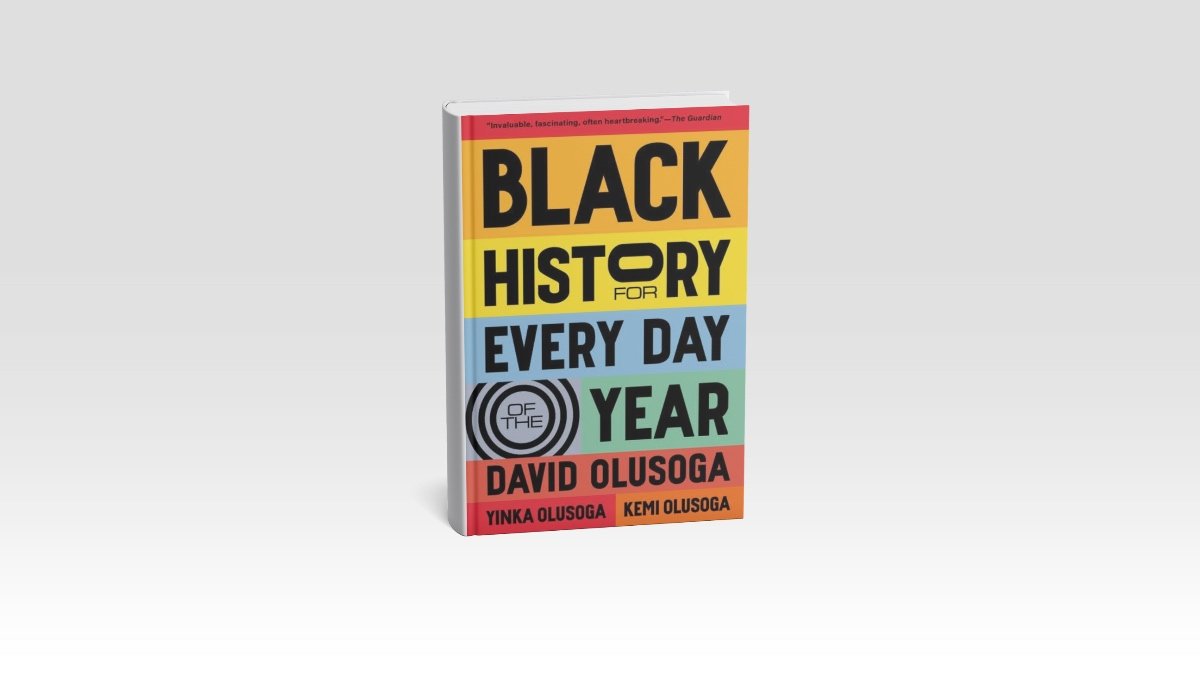
In Black History for Every Day of the Year, historian and broadcaster David Olusoga collaborates with his siblings, Yinka and Kemi, to create a compelling and accessible resource that seeks to integrate Black history into the mainstream narrative. This book offers readers a daily entry—366 in total—highlighting significant events, individuals, and themes from Black history, thereby challenging the traditional relegation of such histories to a single month.
The entries span a vast temporal and geographical range, featuring figures like Sarah Forbes Bonetta, the Benin Bronzes, and the Sharpeville massacre, alongside pivotal legal cases such as the 1772 Mansfield Judgment and the 1954 Brown v. Board of Education ruling. These selections not only illuminate the depth and breadth of Black history but also underscore its integral role in shaping global and national narratives.
One of the book’s notable strengths is its ability to present complex historical events in an engaging and digestible format. Each entry serves as both an informative snapshot and an invitation for deeper exploration, making it an invaluable tool for educators, students, and general readers alike. By situating Black history within the broader context of global events and movements, the Olusogas effectively dismantle the notion of Black history as an isolated or ancillary subject.
However, while the book succeeds in its mission to mainstream Black history, it also serves as a poignant reminder of the work still required. As noted in a recent article, despite the publication of such comprehensive works, a significant portion of the British public remains unfamiliar with Black British historical figures, highlighting the ongoing struggle to fully integrate these narratives into the collective consciousness The Guardian.
In conclusion, Black History for Every Day of the Year is more than just a book; it is a call to action. It urges readers to recognize and celebrate the contributions of Black individuals and communities throughout history, advocating for a more inclusive and accurate portrayal of the past. Through its thoughtful curation and accessible presentation, the Olusogas have crafted a work that not only educates but also inspires continued reflection and engagement with Black history.
A book review based off the article by Jenny Woodley of the Conversation. Click here to read.