
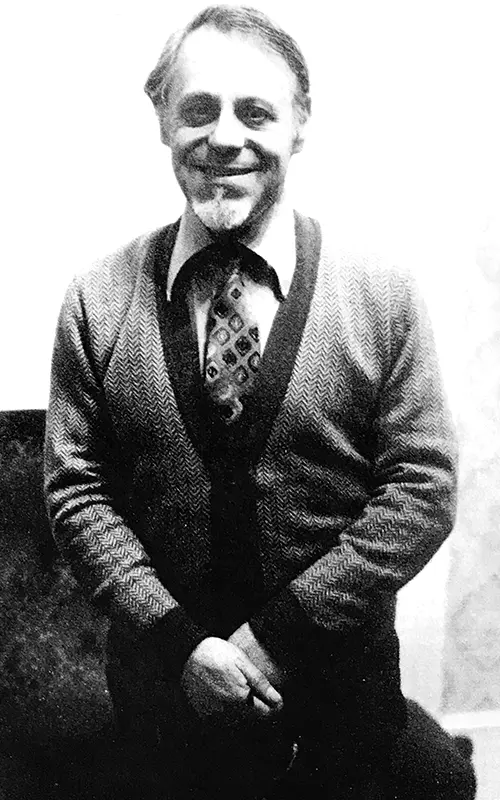
Maurice Ludmer (1926–1981) was a British journalist, communist activist, and anti-racist campaigner best known for founding Searchlight magazine, a publication dedicated to exposing fascism and racism in post-war Britain. Born in 1926 to a hairdresser father and a Hebrew teacher mother in Salford, Ludmer grew up in a working-class Jewish family that valued education and social justice. His family moved to Birmingham in 1939, where he joined the Young Communist League, marking the beginning of a lifelong commitment to left-wing and anti-fascist activism.
During the Second World War, Ludmer served in the British Army. A visit to the liberated Belsen concentration camp profoundly shaped his worldview, reinforcing his determination to confront fascism and racial hatred wherever they appeared. After the war, he returned to civilian life and worked as a sports journalist, but his political engagement deepened as racial tensions escalated in Britain during the 1950s.
The Notting Hill riots of 1958 and the notorious 1964 Smethwick election—where racist campaigning shocked the nation—were turning points for Ludmer. In response to the growing presence of racial discrimination and far-right politics, he became a central figure in several grassroots movements. In 1961, alongside activists including members of the Indian Workers Association such as Jagmohan Joshi, he helped establish the Co-ordinating Committee Against Racial Discrimination (CCARD). The committee united trade unionists, community organisers, and anti-colonial activists in opposing both institutional and street-level racism. CCARD later contributed to the formation of the Campaign Against Racial Discrimination (CARD), which lobbied for stronger anti-discrimination laws and broader awareness of racial injustice.
Although a committed communist for much of his life, Ludmer eventually resigned from the Communist Party, disillusioned by what he saw as its insufficient action against racism. He continued his activism independently, building bridges across political and community lines to strengthen anti-racist efforts.
In February 1975, Ludmer founded Searchlight magazine, which became his most enduring legacy. The publication aimed to “turn the searchlight on the extremists,” investigating and exposing fascist, neo-Nazi, and racist organisations such as the National Front and Column 88. Through Searchlight, Ludmer combined investigative journalism with activism, publishing detailed reports on far-right networks, their international links, and their infiltration attempts in British society. He believed that anti-racism required not only legal protections but also proactive, collective resistance by Black, Asian, and Jewish communities.
Ludmer was also involved in the creation of the Anti-Nazi League in the late 1970s, a broad coalition that mobilised trade unions, youth groups, and cultural figures against the far right. His work helped shift public understanding of racism from being seen as isolated prejudice to a systemic and organised threat.
Maurice Ludmer died in 1981, but his influence endured. Searchlight continued to operate after his death, remaining an important source of information on extremist movements. Ludmer is remembered as a courageous and principled figure whose journalism and activism embodied a lifelong dedication to justice, solidarity, and the fight against fascism and racial hatred.
“Never again.”
After his 1946 visit to Belsen concentration camp, Ludmer reportedly pledged himself “wholeheartedly and irrevocably” to preventing the recurrence of such atrocities. (Mentioned in the Searchlight tribute “Remembering Maurice Ludmer.”)
We use cookies to improve your experience on our site. By using our site, you consent to cookies.
Manage your cookie preferences below:
Essential cookies enable basic functions and are necessary for the proper function of the website.
These cookies are needed for adding comments on this website.
You can find more information about our Cookie Policy and Privacy Policy.