
These decades before World War II saw Black, Chinese, and Indian migrants face systemic segregation in Birmingham, spurring early anti-racism efforts against discrimination and fascist figures like Oswald Mosley, with the global significance underscored by Mahatma Gandhi's 1931 visit.
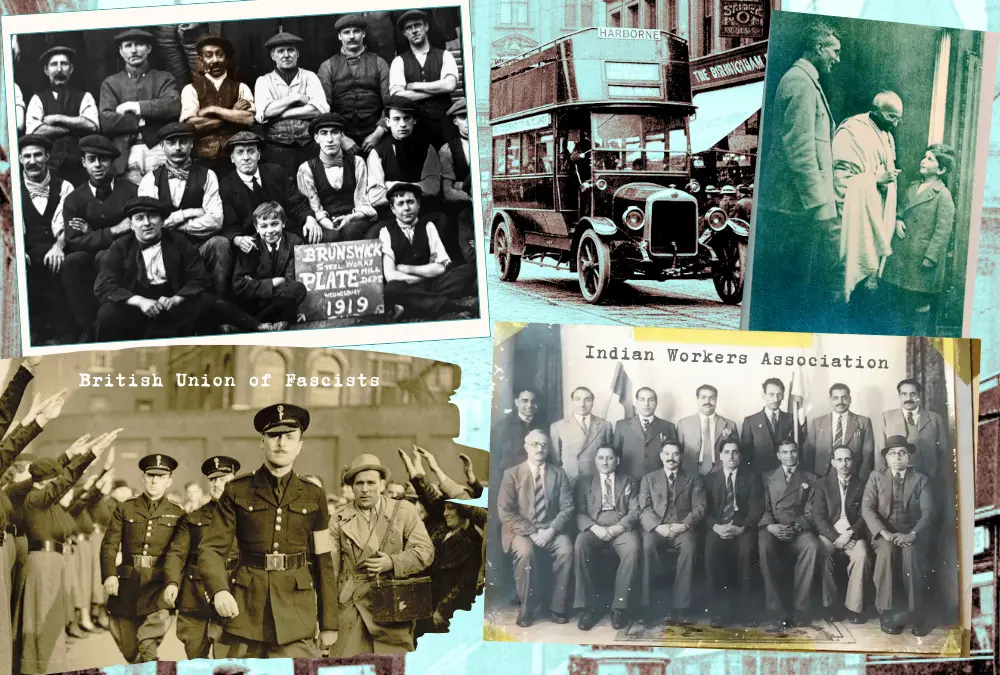
The three decades from 1910 to 1939 established the crucial foundation for Birmingham’s diversity and its subsequent anti-racism struggles.
The 1910s saw the quiet arrival of Black, Chinese, and Indian former soldiers and seamen who had supported the British war effort, settling and taking on tough, poorly paid industrial jobs post-WWI. Their presence in the city’s expanding foundries by 1919 was an undeniable feature of the city’s industry, despite facing immediate racial discrimination in housing and employment.
The 1920s escalated these tensions, with post-war job competition fueling resentment and the widespread, informal practice of the ‘colour bar’ which was segregation barring non-white people from pubs, housing, and workplaces. This systemic discrimination was often exacerbated by hostile press coverage and official policies of repatriation.
By the 1930s, while Irish and Jewish communities were the main immigrant groups, racial segregation persisted. The city’s anti-racism spirit was galvanised by strong working-class opposition to Oswald Mosley’s British Union of Fascists (BUF), documenting a continuous resistance to hate. This era also saw the significant global connection when Mahatma Gandhi visited Woodbrooke in Birmingham in 1931 as part of his tour of Britain.
This three-decade period documents the resilience of pioneers and the deep-seated systemic challenges that laid the groundwork for future anti-racist movements.

1917 Chinese workers arrive in Birmingham
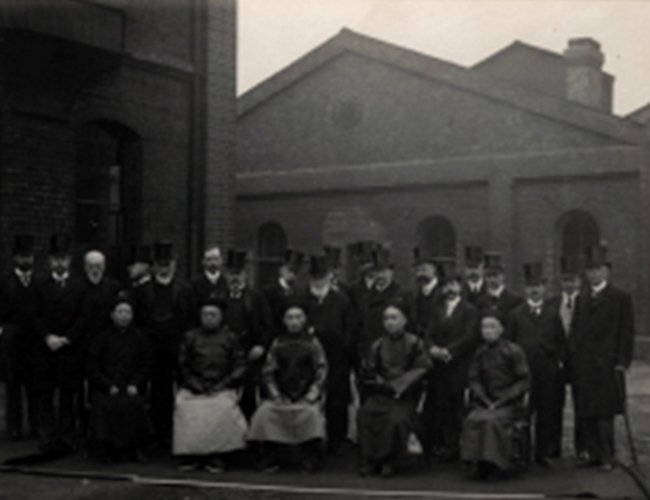
Chinese workers began arriving in Birmingham during the First World War as a result of major disruptions to global shipping. Many were seamen employed on Asian merchant vessels that had been sunk by German U-boats, leaving them stranded in Britain and redirected into industrial labour. In Birmingham, they were largely employed in the lowest-paid and most insecure areas of the metal trades, where labour shortages created opportunities for exploitation.
Their arrival was documented by John Beard, a Workers’ Union organiser, in a December 1917 article that offers a rare contemporary account of Chinese wartime labour in the Midlands. Beard warned that employers sought to use Chinese workers as a cheap, unorganised workforce and, potentially, as strikebreakers, thereby weakening collective bargaining and deepening divisions within the working class. Crucially, he argued that exclusion rather than solidarity served employers’ interests.
Beard advocated the active unionisation of Chinese workers and reproduced a Chinese-language poster inviting them to attend a union meeting on 21 October 1917, signalling an early attempt to build cross-racial labour solidarity in wartime Britain.
1920s: Black and Asian workers arrive in Birimgham
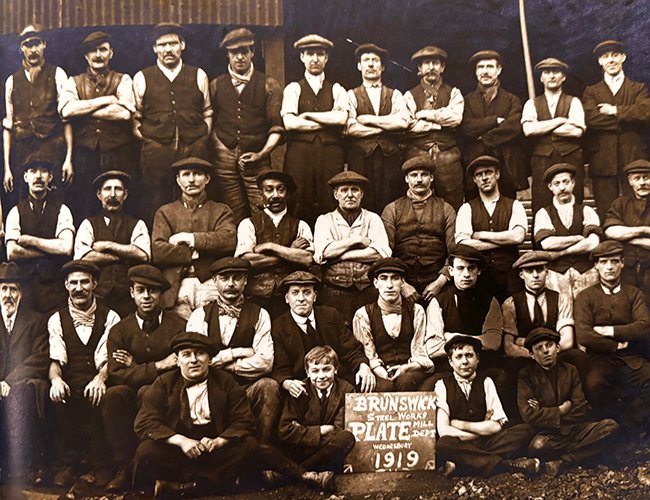
In the aftermath of the First World War, Birmingham’s industrial economy remained heavily dependent on overseas links forged through empire. The city’s manufacturing base, particularly metalworking and engineering, relied on global supply chains and migrant labour flows connecting the Midlands to Asia, Africa, and the Caribbean. By the late 1910s, Black, Asian, and Chinese workers were already embedded within Birmingham’s foundries and workshops, contributing essential labour to post-war industrial recovery.
This reliance on racialised labour coincided with heightened social pressure following demobilisation. As returning servicemen competed for jobs and housing, tensions intensified in working-class districts. While 1919 saw violent race riots in port cities such as Cardiff and Liverpool, Birmingham’s conflicts were more often expressed through economic exclusion and housing competition rather than large-scale street violence.
These conditions exposed a central contradiction of the imperial economy: Birmingham’s industrial strength depended on migrant labour, yet racialised workers remained marginalised within the city’s social and civic life.
1931 Hebrew school opens in Birimgham
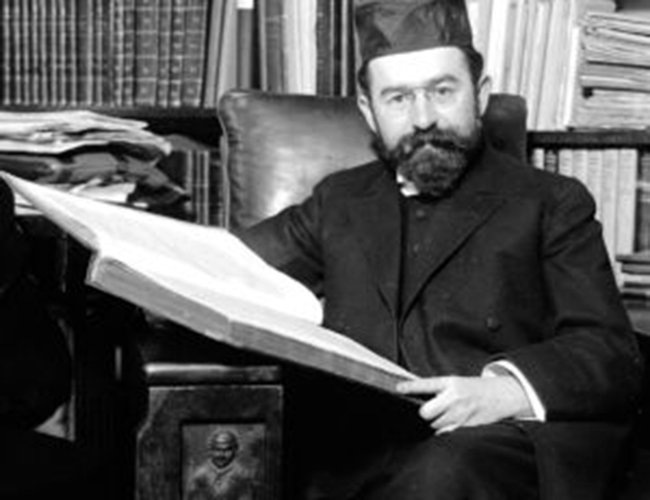
Chief Rabbi Joseph Hertz ceremonially laid the foundation stone for a new Hebrew school in Birmingham, marking an important moment in the consolidation of Jewish educational and communal life in twentieth-century Britain. The event signalled the growing confidence and institutional maturity of Anglo-Jewry, particularly beyond London, as Jewish communities became more firmly established in industrial cities such as Birmingham.
The ceremony was captured in a British Pathé newsreel, which provides a rare visual record of Jewish civic presence in the period. The footage foregrounds Hertz’s national religious authority while situating Jewish education within the public sphere of the city. His involvement underscored the central role of schooling in sustaining religious practice, cultural transmission, and communal cohesion amid migration and urban change.
More broadly, the foundation-laying reflects how minority communities invested in educational infrastructure as both a strategy of cultural continuity and a means of asserting belonging within British civic life. The public, ceremonial framing reveals an aspiration towards visibility, legitimacy, and contribution within the wider social order.
Watch a film of the event here
1931 : Gandhi visits Birmingham
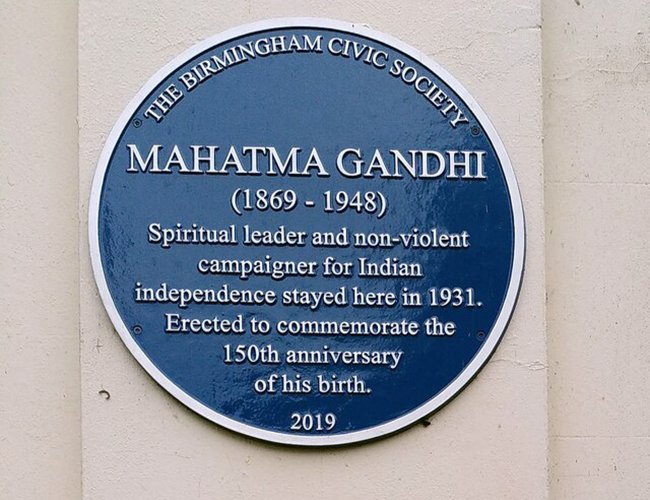
In 1931, during his three-month stay in Britain for the London Round Table Conference on constitutional reform in India, Mahatma Gandhi visited Woodbrooke, a Quaker study centre in Selly Oak, Birmingham. The visit formed part of Gandhi’s wider engagement with Britain’s imperial centres, combining meetings with Indian workers in the West Midlands and public addresses to local audiences. Woodbrooke’s traditions of pacifism, adult education, and social reform made it a particularly resonant site for dialogue between anti-colonial politics and progressive British religious culture.
Gandhi’s visit is now commemorated by a plaque installed by the Birmingham Civic Society, affirming Birmingham’s place within transnational histories of anti-imperial exchange. The significance of the site is further deepened by the fact that, only a year earlier, Rabindranath Tagore had also visited Woodbrooke. Together, these encounters position Birmingham as a node of ethical internationalism and cross-cultural political dialogue during the interwar period.
1932: British Union of Fascists (BUF) Founded
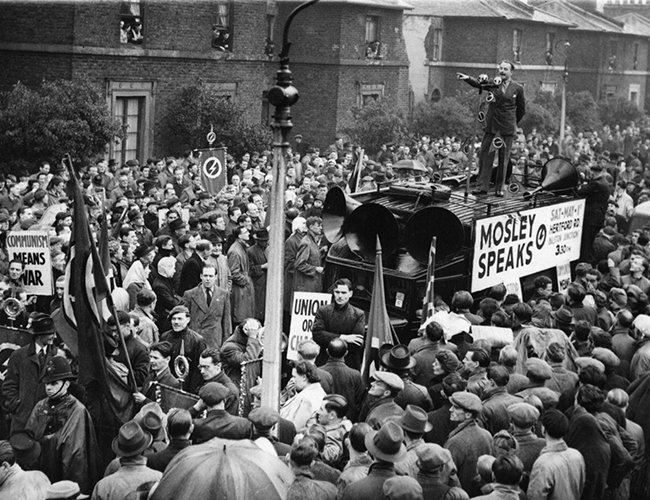
During the 1930s, Oswald Mosley and the British Union of Fascists (BUF) treated Birmingham as a strategic site for fascist mobilisation. As a major industrial city shaped by unemployment, labour unrest, and social change, Birmingham was viewed as fertile ground for authoritarian politics. Mosley staged public meetings and marches across the city, often accompanied by uniformed Blackshirts whose militarised spectacle was intended to project order and national renewal while intimidating opponents.
Mosley’s rhetoric sought to exploit economic insecurity by reframing social crisis through an aggressive nationalism that drew on anti-Semitism and hostility to organised labour. These appearances, however, were frequently met with organised resistance. Trade unionists, communists, Jewish groups, and local anti-fascist networks mobilised to disrupt BUF events, turning Birmingham into a site of sustained political confrontation.
The significance of Mosley’s presence lies less in fascist influence than in the resistance it provoked. These clashes fostered cross-class and cross-community solidarities, helping to embed local traditions of anti-fascist and anti-racist organising that would shape Birmingham’s political culture in the decades that followed.
Watch the Peaky Binders retelling of the story
Read Craig Morgans phD thesis about the events
1938: Founding of the Indian Workers Association
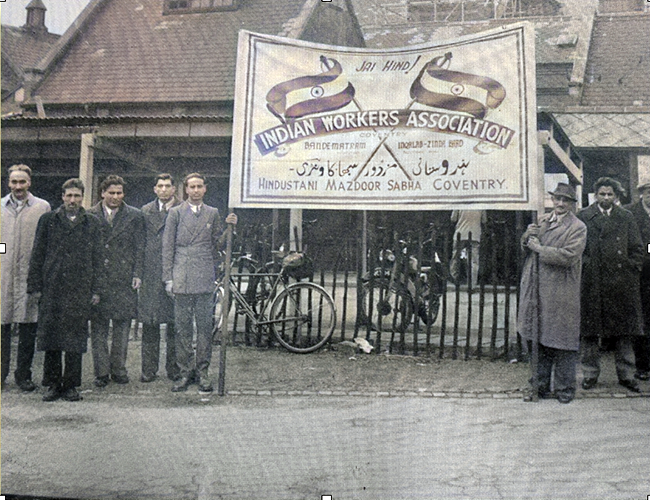
The Indian Workers’ Association (IWA) was founded in 1938 in Coventry by three Indian workers: Udham Singh, a trade union organiser and Trades Council delegate; Ujjager Singh; and Akbar Ali Khan. Its early membership was drawn largely from Punjabi pedlars operating across the Midlands and from Indian factory workers employed in Coventry’s engineering industries. These workers faced precarious employment, racial discrimination, and political exclusion within Britain’s industrial economy.
Although established in Coventry, the IWA quickly developed a strong presence in Birmingham, where larger South Asian communities and dense industrial employment supported sustained organising. The association became one of the most significant anti-racist organisations in twentieth-century Britain, distinctive for linking local struggles over wages, housing, and working conditions with an internationalist critique of British imperialism in India. By connecting race, class, and empire within a single political framework, the IWA articulated a form of diasporic labour activism that prefigured later traditions of anti-racist, community-based organising in the Midlands and beyond.
We use cookies to improve your experience on our site. By using our site, you consent to cookies.
Manage your cookie preferences below:
Essential cookies enable basic functions and are necessary for the proper function of the website.
These cookies are needed for adding comments on this website.
You can find more information about our Cookie Policy and Privacy Policy.