
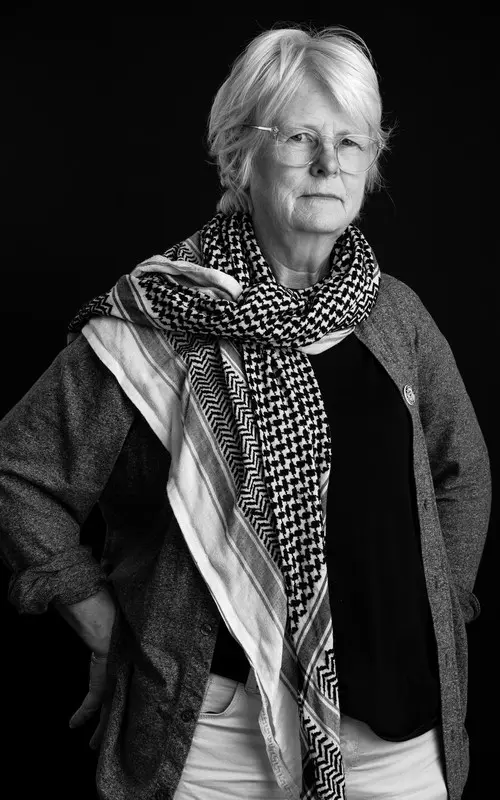
Carol Williams grew up in West London. In 1970, at the age of eleven, her family moved to Chiswick, into a predominantly white street. She vividly recalls the reactions when the first Black families arrived—schoolmates saying, “They smell” and “They’re dirty.” This was her first introduction to racism. Coming of age in the 1970s, during the rise of the National Front, racism became the foundation of her earliest political awareness.
Activism began early for Carol. One of her first actions was collecting money outside her home for the Aberfan disaster. With a Welsh father, the tragedy had a deep impact on her family. The deaths of so many children, caused by the wilful neglect of the British Coal Board, were a formative lesson in how little value those in power placed on working-class lives.
Politics ran through her home life. With parents who were members of the Communist Party, the house was filled with political books. One that particularly influenced her was Soledad Brother: The Prison Letters of George Jackson, which condemned racism in the United States and fuelled her outrage at the injustices of racial oppression. She was inspired by Rosa Parks, Angela Davis, and Martin Luther King Jr., and in awe of Tommie Smith and John Carlos raising their fists at the 1968 Olympics. The arrest of Bernadette Devlin following the Bogside riots of 1969 also left a vivid impression. These figures taught Carol the importance of standing firm in one’s beliefs and being prepared to fight for justice.
In the 1980s, Carol became active in the anti-apartheid campaign, her first real experience of organised political action. Around this time, she joined the Socialist Workers Party, which helped her connect the issues she cared deeply about: famine, war, Palestine, poverty, and the global injustice of unnecessary deaths from lack of clean water. She came to see how all these horrors stemmed from a system that prioritises profit over people, creating immense wealth for a powerful minority at the expense of the majority. To defend such a system, with its grotesque inequalities and violence, requires constant justification—and racism, as Malcolm X said, is its most powerful weapon: “You can’t have capitalism without racism.” Division, she realised, is essential for the system to survive.
For Carol, racism is not incidental but systemic. It seeps through everyday life, but when the system enters crisis—as it is today—its mask slips. In these moments, resistance grows, from Black Lives Matter and Palestine solidarity to trans rights campaigns and opposition to austerity and cuts. At the same time, racism intensifies, as seen in current attacks on refugees and migrants under slogans like “stop the boats” and “save our women.”
Carol holds firmly to the belief that if capitalism cannot exist without racism, then eradicating capitalism is the path to eradicating racism.
When asked about anti-racism, Carol says:
“Most people would say they aren’t racist, but anti-racism is much more.”
We use cookies to improve your experience on our site. By using our site, you consent to cookies.
Manage your cookie preferences below:
Essential cookies enable basic functions and are necessary for the proper function of the website.
These cookies are needed for adding comments on this website.
You can find more information about our Cookie Policy and Privacy Policy.