
Facing far-right violence and institutional moral panic, the 2010s in Birmingham fueled a powerful movement for decolonisation and intellectual resistance, culminating in Europe's first Black Studies degree and landmark cultural reckoning.
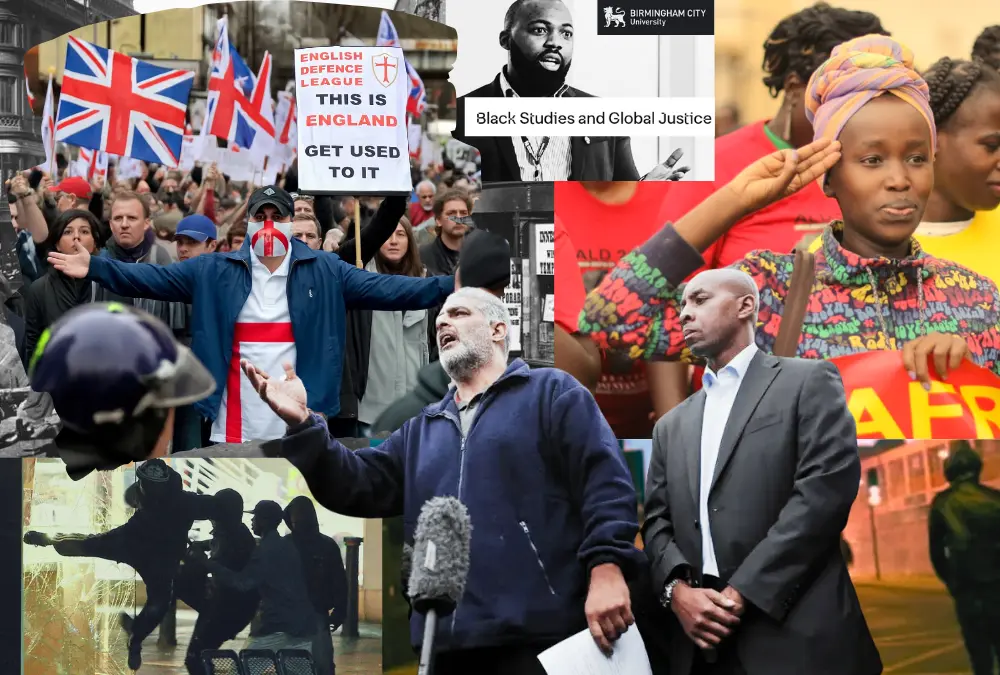
In the decade following the global war on terror, few British cities felt its aftershocks as sharply as Birmingham. With one of the country’s most diverse populations, the city became a national stage for anxiety over race, religion, and belonging.
The tone was set early. In 2010, the far-right English Defence League staged protests in Dudley, near Birmingham, claiming to oppose “Islamic extremism.” Their real message was aimed squarely at Muslim communities. But they were met with fierce resistance. Thousands joined counter-demonstrations, echoing Birmingham’s long tradition of anti-fascist organising.
In 2011, unrest erupted following the police killing of Mark Duggan in London. Riots reached Birmingham, where shops burned and a police station was torched. Tragedy struck when three men, Haroon Jahan, Shahzad Ali, and Abdul Musavir, were killed while protecting their neighbourhood. The city braced for more violence, but Haroon’s father, Tariq Jahan, publicly urged calm. His appeal helped steady the city at a fragile moment.
More shocks followed. In 2013, 75-year-old Mohammed Saleem was murdered as he walked home from mosque. The killer, a Ukrainian white supremacist, later bombed three local mosques in a bid to spark racial conflict. The attack forced Britain to confront the threat of far-right terrorism—long overshadowed by fears of Islamist extremism.
That same year, an anonymous letter alleged a plot by Muslim educators to “Islamise” Birmingham schools. The so-called “Trojan Horse” affair triggered government inquiries and media panic. Though the claims were debunked, the damage was lasting: careers ruined, communities stigmatised, and Islamophobia further embedded in public discourse.
Yet even as Birmingham was cast in a national spotlight of suspicion, it became a site of cultural revival. The city marked the 40th anniversary of African Liberation Day in 2015, reconnecting with its radical Black history. In 2017, Birmingham City University launched Europe’s first Black Studies degree, reshaping academic norms. Exhibitions like The Past Is Now and campaigns such as Literature Must Fall challenged colonial narratives in museums and publishing.
By the end of the decade, Birmingham had absorbed crisis after crisis, but emerged as a city still pushing back. Resilient and defiant, it became a reflection of Britain itself: divided, dynamic, and in search of a more honest reckoning with its past and future.

2010: English Defence League Hold Far-Right Marches Across the Midlands
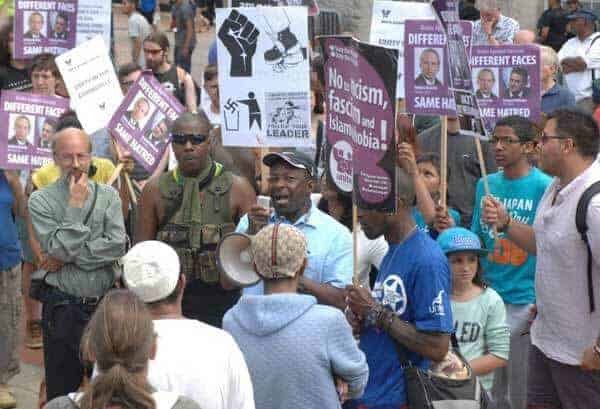
In 2010, the English Defence League (EDL), a far-right street movement formed the previous year, staged several provocative demonstrations across the Midlands, claiming to oppose “Islamic extremism.” In reality, their rallies became flashpoints for anti-Muslim hatred, drawing far-right supporters, football hooligans, and white nationalists.
The most notorious protests occurred in Dudley in April and July, targeting a proposed mosque. Hundreds of EDL supporters gathered, with racist chanting, violence, and business closures disrupting the town centre.
In response, local communities mobilised. Unite Against Fascism (UAF), trade unions, faith groups, and residents organised counter-protests, with thousands turning out in solidarity with Muslim communities and rejecting the EDL’s divisive message.
While tensions led to clashes and arrests, the events underscored both the danger of far-right mobilisation and the strength of the region’s anti-fascist traditions.
The Dudley protests left a lasting mark, deepening communal mistrust but also sparking renewed anti-racist organising, affirming that the far right would continue to meet fierce resistance in the Midlands.
Read about the iconic image
2011: Handsworth and Birmingham Riots
In August 2011, following the police shooting of Mark Duggan in Tottenham, unrest spread across English cities. On 8 August, violence reached Birmingham, with clashes in the city centre and Handsworth. A police station was set alight, symbolising deep-rooted tensions between communities and law enforcement.
Despite an increased police presence, disorder continued the next night, cars were torched, shops looted, and confrontations erupted in several areas, echoing the 1980s uprisings driven by similar grievances: racial inequality, unemployment, and aggressive policing.
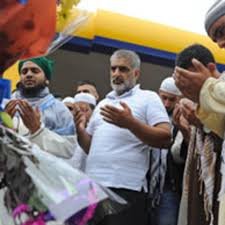
Tragedy struck on 10 August when three men, Haroon Jahan, Shahzad Ali, and Abdul Musavir, were killed in Winson Green while protecting local shops. The city feared further violence. That day, Tariq Jahan, Haroon’s father, delivered a powerful public plea for calm: “Step forward if you want to lose your sons. Otherwise, calm down and go home.” His message was credited with easing tensions.
The 2011 riots were both a flashpoint of anger and a reminder of the strength of grassroots leadership in moments of crisis.
2013: Terrorist Murder of Mohammed Saleem and Far-Right Violence in Birmingham
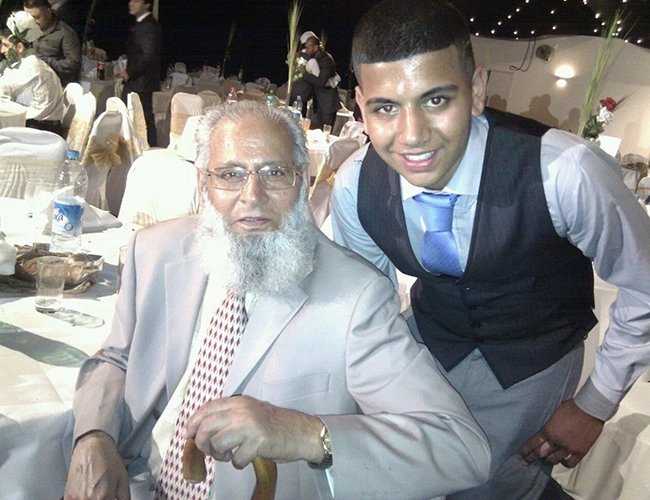
In April 2013, 75-year-old Mohammed Saleem was fatally stabbed while walking home from evening prayers in Small Heath, Birmingham. The attacker, Pavlo Lapshyn, a Ukrainian national on a UK work placement, targeted Saleem purely for his race and religion. It was later described as one of the most significant far-right terror attacks in modern Britain.
In the weeks following the murder, Lapshyn planted bombs outside mosques in Walsall, Wolverhampton, and Tipton. Though no lives were lost, the attacks were designed to terrorise Muslim communities and incite racial conflict. Upon arrest, Lapshyn admitted he wanted to “increase racial tension.” He was convicted of murder and terrorism offences and sentenced to life imprisonment.
Saleem’s murder shocked Birmingham and the nation, exposing the deadly threat of white supremacist violence at a time when terrorism was largely framed through Islamist extremism.
The case remains a chilling reminder of rising Islamophobia and far-right extremism, and a call to confront hate with vigilance, solidarity, and a renewed commitment to anti-racism.
watch
2013: Trojan Horse Affair
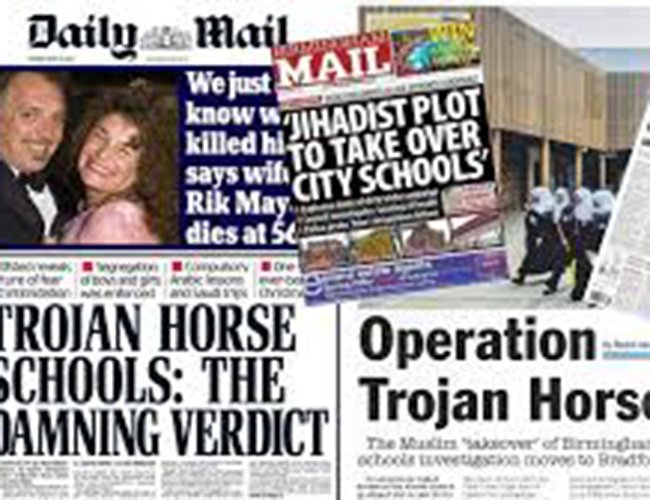
In 2013, an anonymous letter alleging a “plot” by Muslim governors and teachers to impose hard-line Islamic practices in Birmingham schools sparked what became known as the Trojan Horse affair. Though the letter was soon exposed as a fake, its claims ignited national panic, fuelled by sensationalist media and political rhetoric that cast widespread suspicion on Muslim communities.
The government launched overlapping investigations through Ofsted, the Education Funding Agency, and the Department for Education. Schools faced intense scrutiny, and the narrative shifted from local governance concerns to national security.
The fallout was severe: long-serving teachers and governors were suspended, dismissed, or banned, often without fair process. Trust between Muslim communities and public institutions was deeply damaged.
Despite no evidence of radicalisation, the affair embedded Islamophobic tropes into education policy and public discourse, linking Muslim leadership with extremism.
A decade on, Trojan Horse remains a stark example of how moral panic, prejudice, and political opportunism can distort justice and harm communities under the guise of safeguarding.
watch
2015: 40th Anniversary of African Liberation Day
In 2015, Birmingham hosted the 40th anniversary of African Liberation Day (ALD) in the UK, reaffirming the city’s pivotal role in Pan-African organising. Led by the Pan-Afrikan Congress Movement, the event brought together activists, scholars, and community members to reflect on four decades of resistance, solidarity, and the ongoing struggle for African unity and liberation.
The programme featured talks, debates, music, spoken word, and food, fostering intergenerational dialogue and celebrating cultural traditions that have long defined ALD. It explored the legacies of colonialism, enduring global inequalities, and urgent contemporary issues such as racism, migration, and economic justice.
For Birmingham the event was both commemorative and forward-looking. It honoured the 1977 ALD in Handsworth Park, one of Britain’s largest Pan-African gatherings, while reaffirming the city’s continued commitment to internationalist politics.
The 40th anniversary of ALD stood as a powerful reminder of Pan-Africanism’s enduring relevance and Birmingham’s role in global and local struggles for justice.
2018: The Past Is Now Exhibition Launched
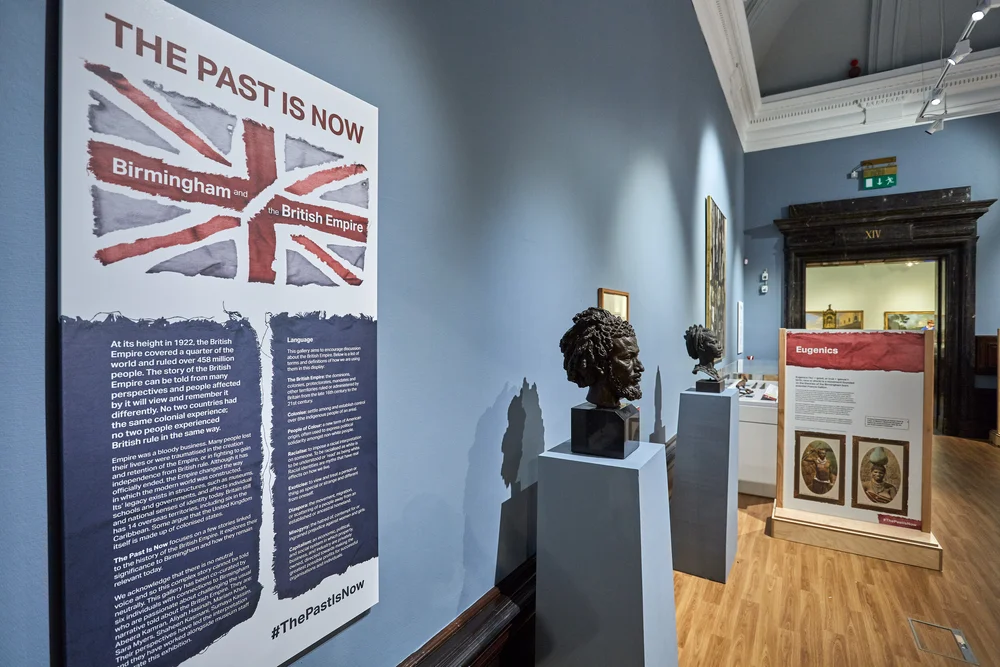
From 28 October 2017 to 24 June 2018, Birmingham Museum & Art Gallery hosted The Past Is Now, a landmark exhibition in the decolonisation of British museums. Co-curated by Aliyah Hasinah, Abeera Kamran, Sumaya Kassim, Sara Amanda, Mariam Khan, and led by Sara Wajid with researcher Rachael Minott, the exhibition critically re-examined Birmingham’s collections through the lens of empire, colonialism, and the city’s imperial legacy.
Far from a traditional display, it prioritised audience engagement and political context. Themes included eugenics, Kenyan and Indian independence, Joseph Chamberlain’s colonial policies, Birmingham’s gun industry, slavery, and environmental destruction. It also interrogated the erasure of people of colour in public institutions.
Curated by politically engaged women, the exhibition connected museum work to wider racial justice movements.
The Past Is Now became a touchstone in decolonial practice, challenging whose histories are told, who tells them, and how institutions must reckon with Britain’s imperial past.
2017: Europe’s First Black Studies Degree Launched
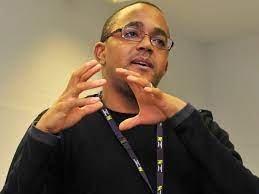
In September 2017, Birmingham City University (BCU) launched the UK and Europe’s first undergraduate degree in Black Studies, led by Dr Kehinde Andrews, a leading scholar of race and education. The programme addressed a longstanding gap in British academia by centring the histories, cultures, and political movements of people of African descent.
Rooted in Birmingham’s legacy of migration and anti-racist activism, the course emerged from years of intellectual and grassroots work. It drew momentum from campaigns like “Why is My Curriculum White?” and Rhodes Must Fall, challenging Eurocentric education and the marginalisation of Black scholarship.
The degree focused on subjects such as slavery, colonialism, Pan-Africanism, Black feminism, and contemporary social justice, emphasising community engagement and the role of academia in liberation struggles.
Hailed as a milestone in decolonising education, BCU’s Black Studies degree inspired similar programmes nationwide. It affirmed the value of Black intellectual traditions and positioned Birmingham as a leading city for academic innovation, activism, and critical conversations on race and justice.
Watch
2019: Literature Must Fall Campaign Launched
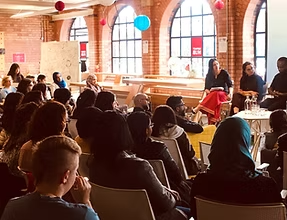
In 2019, writer and critic Kavita Bhanot launched Literature Must Fall with a day-long festival in Birmingham city centre, marking a bold intervention in Britain’s literary culture. The campaign created space for writers, editors, academics, and readers to challenge how literature reinforces colonialism, white supremacy, patriarchy, and class dominance.
Arguing that literature is far from neutral, the initiative critiqued publishing industries, literary canons, and institutions that privilege certain voices while marginalising others. It questioned the myth of the writer as a solitary genius and reframed literature as a deeply political, collective practice.
Through festivals, workshops, and discussions, Literature Must Fall explored how reading, writing, and taste are shaped by power. It spotlighted the exclusion of writers of colour and the imperial legacies embedded in literary education.
Rooted in Birmingham’s tradition of anti-racist organising, the campaign became a powerful call for cultural democracy and decolonisation.
Read more
2010 Post–War on Terror Migration and the Centre for Superdiversity
In the post–War on Terror era (2001–2010), Birmingham became a key site for national debates on migration, race, and belonging. New arrivals from Afghanistan, Iraq, Syria, Eastern Europe, and Africa joined long-established Caribbean, South Asian, and Irish communities, making Birmingham one of Europe’s most superdiverse cities.
Yet this diversity unfolded alongside increasing state scrutiny. Birmingham was an early testing ground for the Prevent Strategy, which framed Muslim communities as “suspect” and positioned integration as a security issue. Birmingham City Council, balancing government pressure with local realities, launched cohesion programmes that critics argued overlooked structural inequalities and deepened mistrust.
Amid this climate, the University of Birmingham established the Institute for Research into Superdiversity (IRiS) in 2013—the UK’s first centre dedicated to studying the overlapping dimensions of difference, including migration status, language, gender, and faith.
Birmingham thus became both a site of securitisation and a hub for rethinking diversity, offering critical insights into how twenty-first-century cities navigate migration, inequality, and justice.
We use cookies to improve your experience on our site. By using our site, you consent to cookies.
Manage your cookie preferences below:
Essential cookies enable basic functions and are necessary for the proper function of the website.
These cookies are needed for adding comments on this website.
You can find more information about our Cookie Policy and Privacy Policy.