
Birmingham in the 1950s underwent a significant social transformation, characterised by the emergence of new migrant communities from the Commonwealth who, while facing prejudice, actively built their own institutions and laid the groundwork for future civil rights struggles.
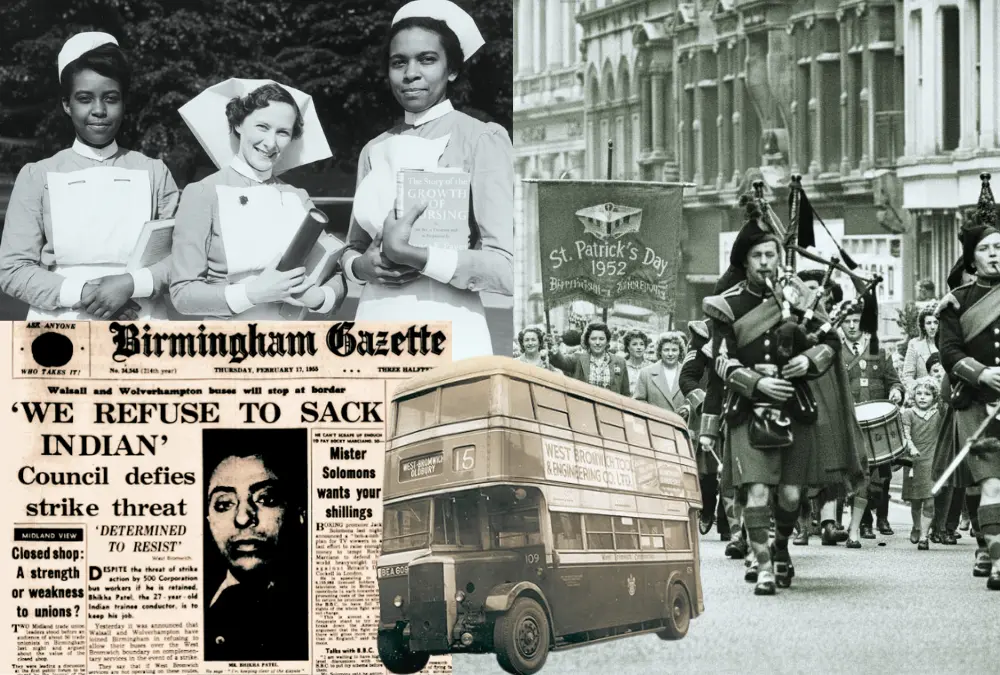
The 1950s in Birmingham was a decade of profound social change. As new migrant communities from the Caribbean, South Asia, and Africa settled in the city, they faced a complex mix of official paternalism, overt prejudice, and growing community solidarity.
Early in the decade, city officials created committees and roles to address immigrant issues, but these efforts often lacked direct representation from the communities they aimed to serve. Meanwhile, key sectors like the NHS actively recruited nurses from the Caribbean, whose essential contributions challenged existing racial barriers.
Migrants themselves were active in shaping the city’s identity. The Irish community held Britain’s first-ever St. Patrick’s Parade, while activists like Henry Gunter organised protests against housing discrimination. These grassroots efforts were crucial in building a sense of belonging and fighting for civil rights.
Despite the visible prejudices of the time, such as a bus strike in West Bromwich over the employment of an Indian conductor, there was also significant opposition to racism. The decade ended with the formation of the Birmingham Immigration Control Association (BICA), a group dedicated to restricting immigration. This, however, was met with strong resistance from migrant community groups, who defended their rights and laid the groundwork for future anti-racist struggles.

1950: Birmingham Establishes Its First Committee on Immigrant Issues
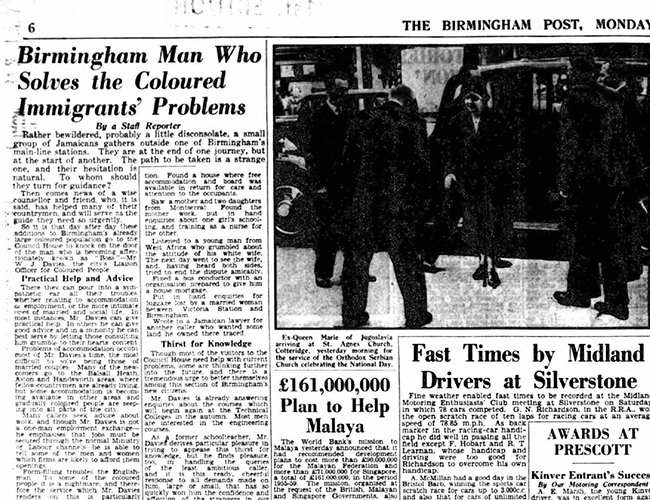
In 1950, Birmingham City Council established the Co-ordinating Committee for Coloured People, the city’s first official body addressing challenges faced by its growing immigrant communities. Comprising local church, welfare, and voluntary group representatives, it acknowledged the social impact of new arrivals from the Caribbean, South Asia, and Africa. However, the committee lacked Black or migrant voices, relying instead on white civic and religious leaders to speak on their behalf—reflecting a paternalistic, top-down approach to policy-making.
In 1954, Birmingham became the first UK council to appoint a liaison officer for “Coloured people,” intended to improve communication with Black and Asian residents. Yet, the role went to a white former colonial officer, reinforcing imperial attitudes and maintaining white control over migrant representation.
These early efforts marked a growing awareness of demographic change but exposed the limitations of the era’s race relations strategies. They underscored the urgent need for direct migrant representation and leadership in shaping local policies.
1951: Caribbean Nurses Recruited to Birmingham Hospitals
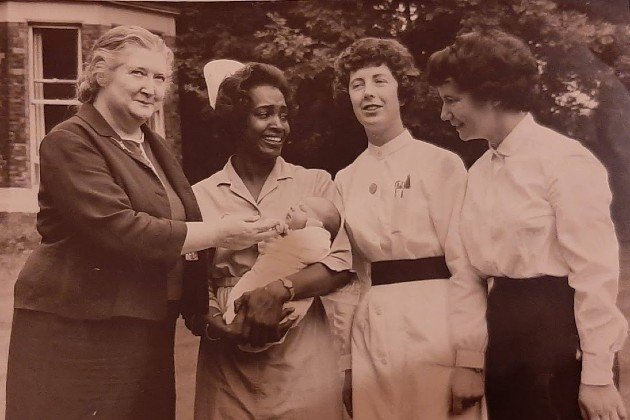
In the early 1950s, Britain’s NHS faced critical nurse shortages. Recruitment drives targeted the Caribbean, urging men and women from Britain’s colonies to help sustain the new healthcare system. Among the recruits was Daphne Steele, born in British Guiana (now Guyana), who arrived in 1949 and worked in hospitals across the Midlands, including Birmingham. Known for her professionalism and care, Steele became a respected figure in British healthcare.
In 1964, she made history as the NHS’s first Black Matron—a senior leadership role traditionally reserved for white British nurses. Her appointment broke racial and gender barriers, symbolising both progress and the vital contributions of Caribbean nurses.
For many Caribbean women, nursing offered opportunity amid challenge. They played a central role in building the NHS, while navigating discrimination and cultural adjustment. Their recruitment marked not just a staffing solution but a turning point in the NHS’s evolution into a diverse institution. Steele’s legacy reflects the strength and impact of the Windrush Generation.
Watch a new story about Daphne Steel
1952: Britain’s First St Patrick’s Parade
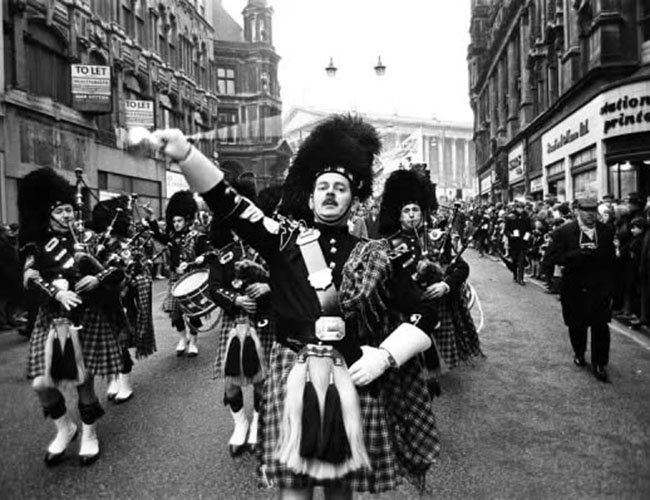
In 1952, Birmingham hosted Britain’s first St Patrick’s Parade, launching a tradition that became one of the city’s most celebrated cultural events. Organised by Father Sean Connellan, a priest from Limerick, the inaugural procession followed a central route through New Street, Corporation Street, and Colmore Row. Though modest in scale, it marked a milestone for Birmingham’s Irish community—one of the city’s largest migrant groups.
The parade expressed pride in Irish heritage and asserted a visible sense of belonging at a time when migration was reshaping the city. It served as a powerful symbol of faith, identity, and community cohesion.
Over the decades, the event grew into one of the largest St Patrick’s celebrations outside Ireland, drawing tens of thousands of participants and visitors. Today, it stands as a testament to the enduring influence of Irish migration on Birmingham’s cultural life and the city’s capacity to embrace and be reshaped by its diverse communities.
Read more here
1953: Henry Gunter Leads Housing Protest in Birmingham
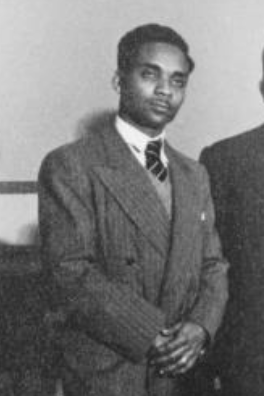
In 1953, Henry Gunter, a Jamaican migrant who arrived in Britain in 1949, led a protest in Birmingham city centre against the widespread racial discrimination in housing. The demonstration directly challenged landlords and letting agencies enforcing a “colour bar,” marking a key moment in the city’s early anti-racist activism.
Despite being qualified in accountancy, Gunter was denied professional work and took a job in a brass rolling mill in Deritend, where he became active in the trade union movement. As a representative of the Amalgamated Union of Engineering Workers on the Birmingham Trades Council, he used his platform to spotlight racial inequality.
His activism led the Trades Council to pass a resolution against racial discrimination. In 1954, Gunter published A Man’s A Man, a groundbreaking study exposing racism in employment, housing, and public life.
Gunter also co-founded the Afro-Caribbean Society and helped establish an inter-racial welfare council. His leadership laid vital groundwork for future anti-racist struggles in Birmingham and beyond.
Read more here
Read about 'A Mans Man here
Read Union Black: The Social and Spatial Mobility of African Caribbeans in Birmingham, UK A phD project about Caribbean groups
1955: Bus Strike in West Bromwich over Employment of Indian Conductor
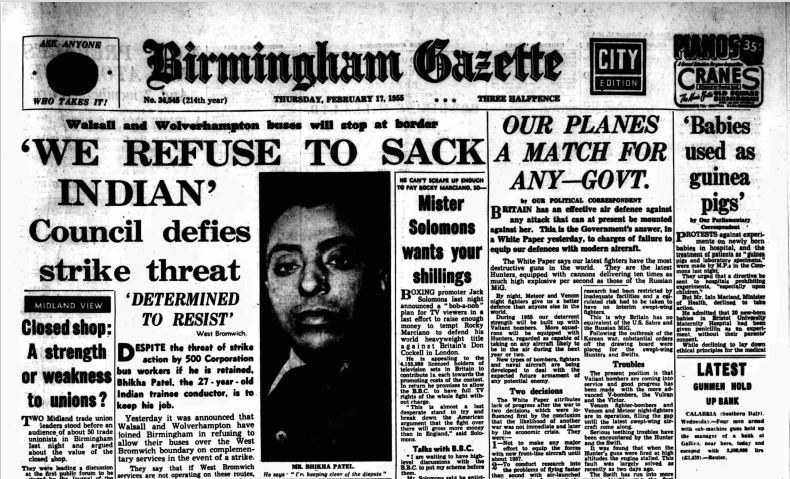
In 1955, West Bromwich Corporation Transport hired Bhikha Patel, an Indian migrant, as a trainee bus conductor—prompting around 450 white drivers and conductors to stage unofficial Saturday strikes at Oak Lane bus station. Their demand: an end to hiring “coloured labour.” The strikes were not backed by the Transport and General Workers’ Union (TGWU), which officially opposed racial discrimination and supported merit-based hiring.
While some workers maintained the walkouts, others rejected the strike’s racist motives. Conductor George Dennis stated, “I do not agree with a colour bar,” reflecting a growing pushback against prejudice in the workplace.
The strike attracted support from far-right groups but was widely condemned by the public, civic leaders, and trade unionists. Lacking broader support, the strike eventually collapsed. Patel kept his job and was later accepted by colleagues.
This episode exposed entrenched racism in 1950s Britain but also showed the power of solidarity, community resistance, and union principles in challenging workplace discrimination.
Read more here
Watch a short film here
1956: Pakistan Welfare Association Established in Birmingham
By the mid-1950s, Birmingham had become home to a growing Pakistani community, shaped by Britain’s long-standing ties to empire and trade. Many of the city’s earliest Pakistani residents were merchant seamen who had arrived through shipping routes connecting Britain with South Asia. A significant number came from Sylhet (then in East Pakistan, now Bangladesh) and from the Campbellpore district in West Pakistan (now Attock, Punjab), areas heavily targeted by shipping companies for recruitment.
Some of these seamen settled in Birmingham after leaving their ships, while others arrived through chain migration, joining relatives who had already established themselves in the Midlands. By the 1950s, the community was expanding rapidly, particularly in areas such as Sparkbrook and Small Heath, where affordable housing and industrial employment were available.
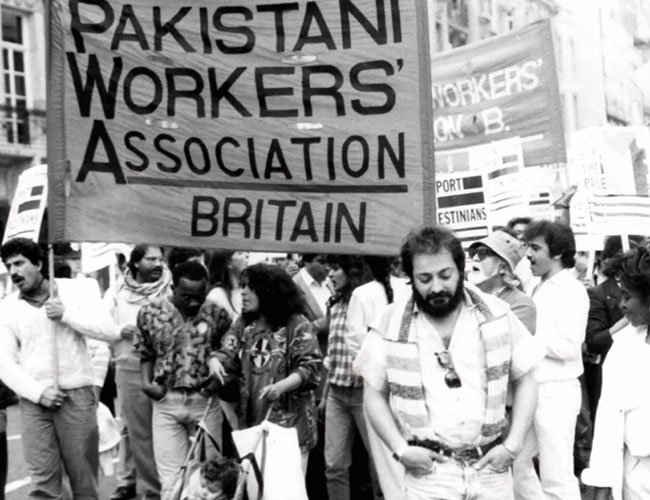
In 1956, the community founded the Pakistan Welfare Association (PWA), locating its base at 93 Stratford Road, Sparkbrook. The PWA quickly became a vital institution, offering support with housing, employment, translation, and navigating the complexities of life in post-war Britain. It also acted as a meeting place and cultural hub, strengthening networks of solidarity and preserving links to heritage and tradition.
The establishment of the PWA reflected both the challenges and resilience of early Pakistani migrants. While they faced discrimination in housing, work, and public life, they built institutions to provide mutual support and collective representation. The PWA also served as an important point of contact between the Pakistani community and local authorities, paving the way for future political and civic engagement.
The creation of the Pakistan Welfare Association in 1956 was a milestone in Birmingham’s history, marking the consolidation of one of the city’s most significant communities and laying foundations for decades of activism, organisation, and cultural life.
1959: Challenging the Birmingham Immigration Control Association
In 1959, Birmingham Conservatives founded the Birmingham Immigration Control Association (BICA) to campaign for restrictions on Commonwealth immigration. Though framed around housing and “social concerns,” BICA’s agenda was rooted in racism—aiming to limit Black and Asian migration while favouring white migrants from countries like Canada and Australia.
Through leaflets, petitions, and public meetings, BICA contributed to rising national hostility and helped pave the way for the 1962 Commonwealth Immigrants Act, which severely curtailed the rights of Commonwealth citizens, particularly targeting Black and Asian people. The Act undermined the principle of equal citizenship and marked a shift toward racially selective immigration policy.
BICA’s creation also sparked resistance. Groups like the Indian Workers Association and Caribbean activists in Birmingham challenged racist narratives, highlighting the vital contributions of migrants to post-war Britain—in hospitals, public transport, and industry.
This moment exposed the racial politics of immigration control while underscoring the resolve of Birmingham’s migrant communities to organise, resist discrimination, and fight for equal rights and recognition.
Read more here
We use cookies to improve your experience on our site. By using our site, you consent to cookies.
Manage your cookie preferences below:
Essential cookies enable basic functions and are necessary for the proper function of the website.
These cookies are needed for adding comments on this website.
You can find more information about our Cookie Policy and Privacy Policy.